Tails from Abruzzo ~ An adventure into Italy’s wild heart

If you’ve ever booked a trip to far flung parts of the world to watch wildlife you’ll know that despite the marketing, the chances of seeing really epic wildlife are often in the laps of the Gods! I can safely say, that whichever Roman god you like to convene with was smiling on us this time.

This trip spawned when we went looking for a suitable combined 70th and 40th birthday excursion for as many members of the family as possible. Wildlife had to be the main draw, but it also had to be Italy.  We discovered the European Nature Trust (TENT) after we tapped in wolf watching and the trip was born. After chatting with the legendary Jacob Dykes from TENT we soon settled on the winter wolf watching adventure. A four day wildlife tour based out of Pescasseroli in the heart of the Abruzzo, Lazio e Molise national park. 

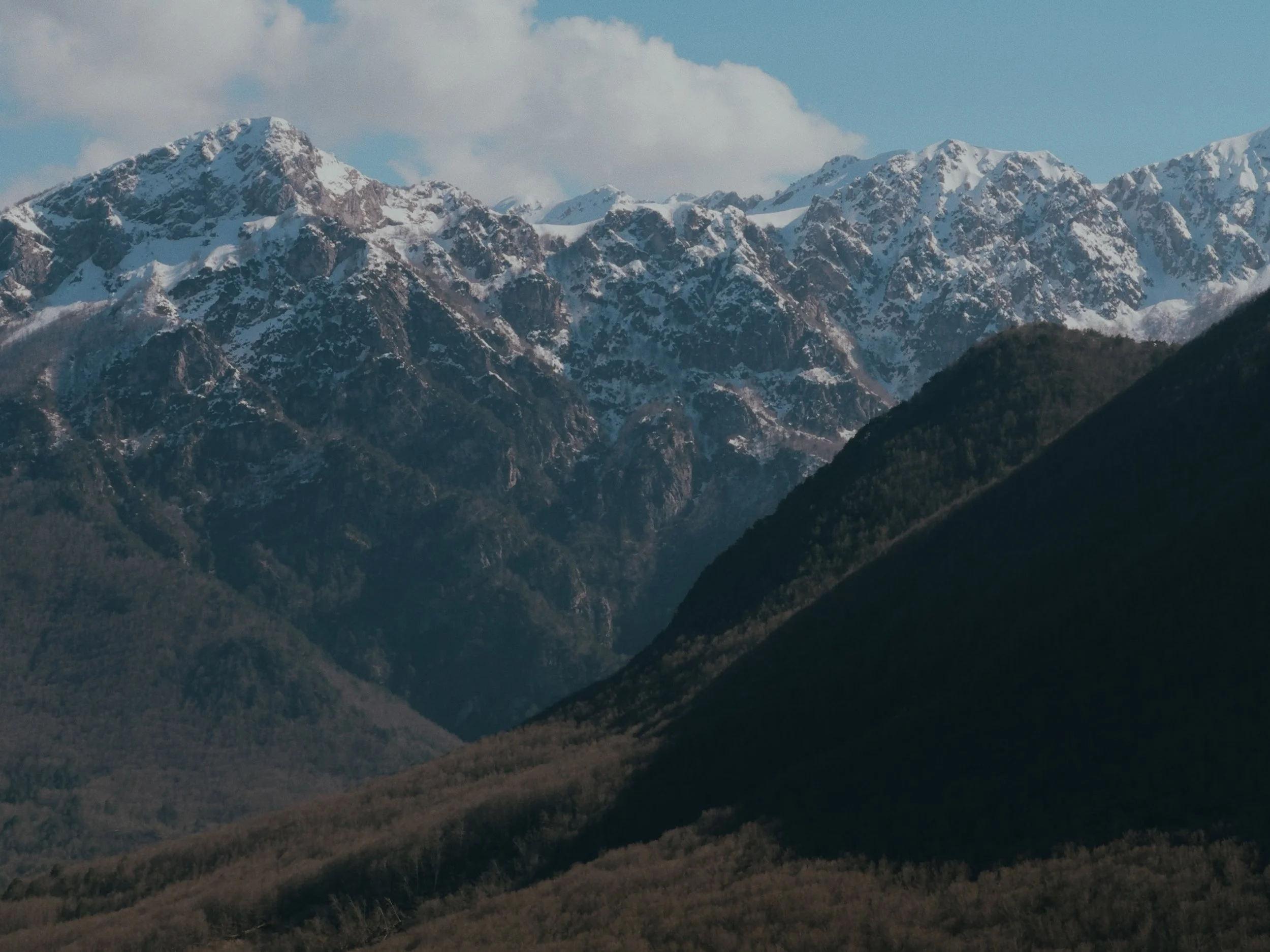
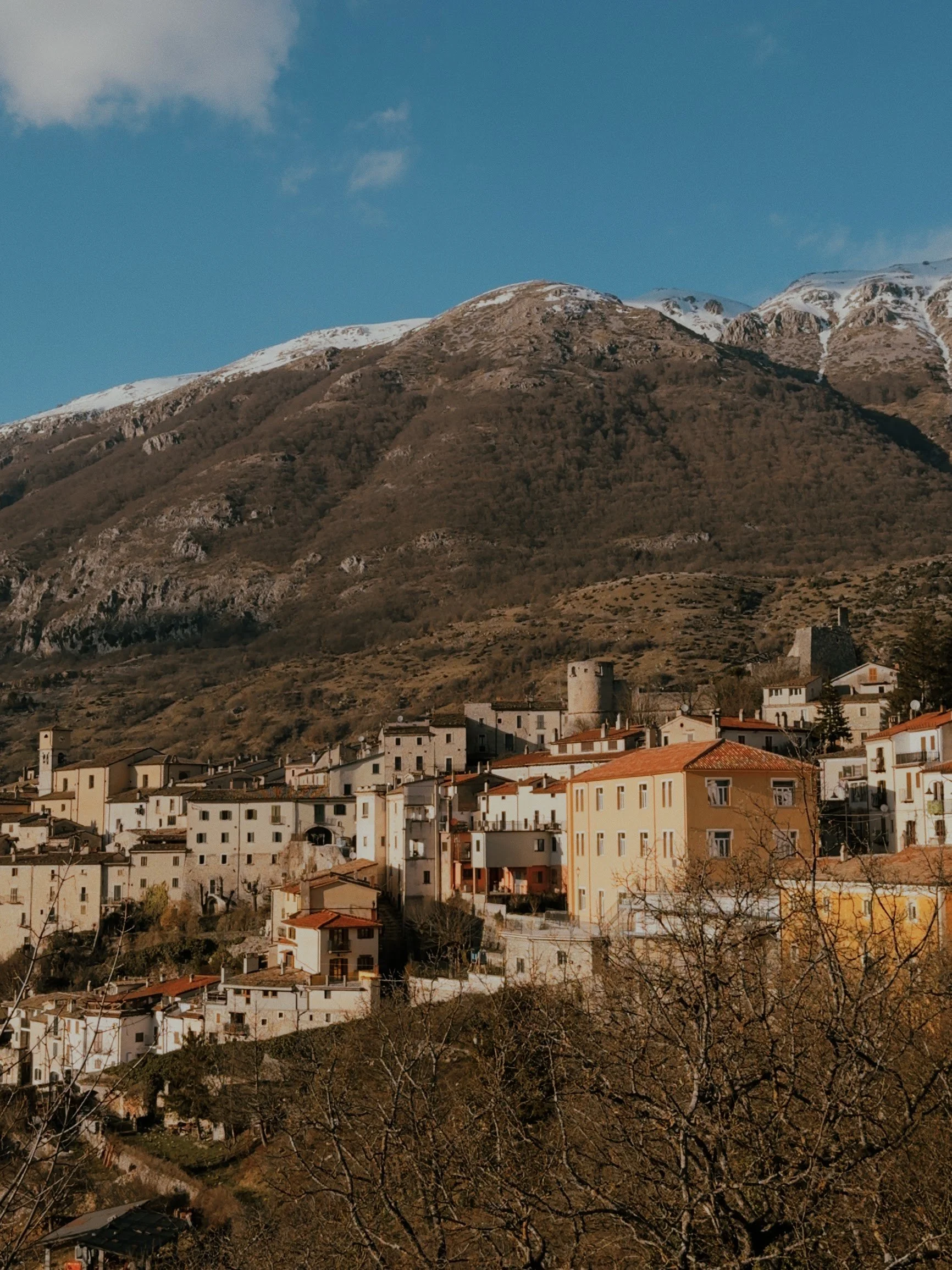
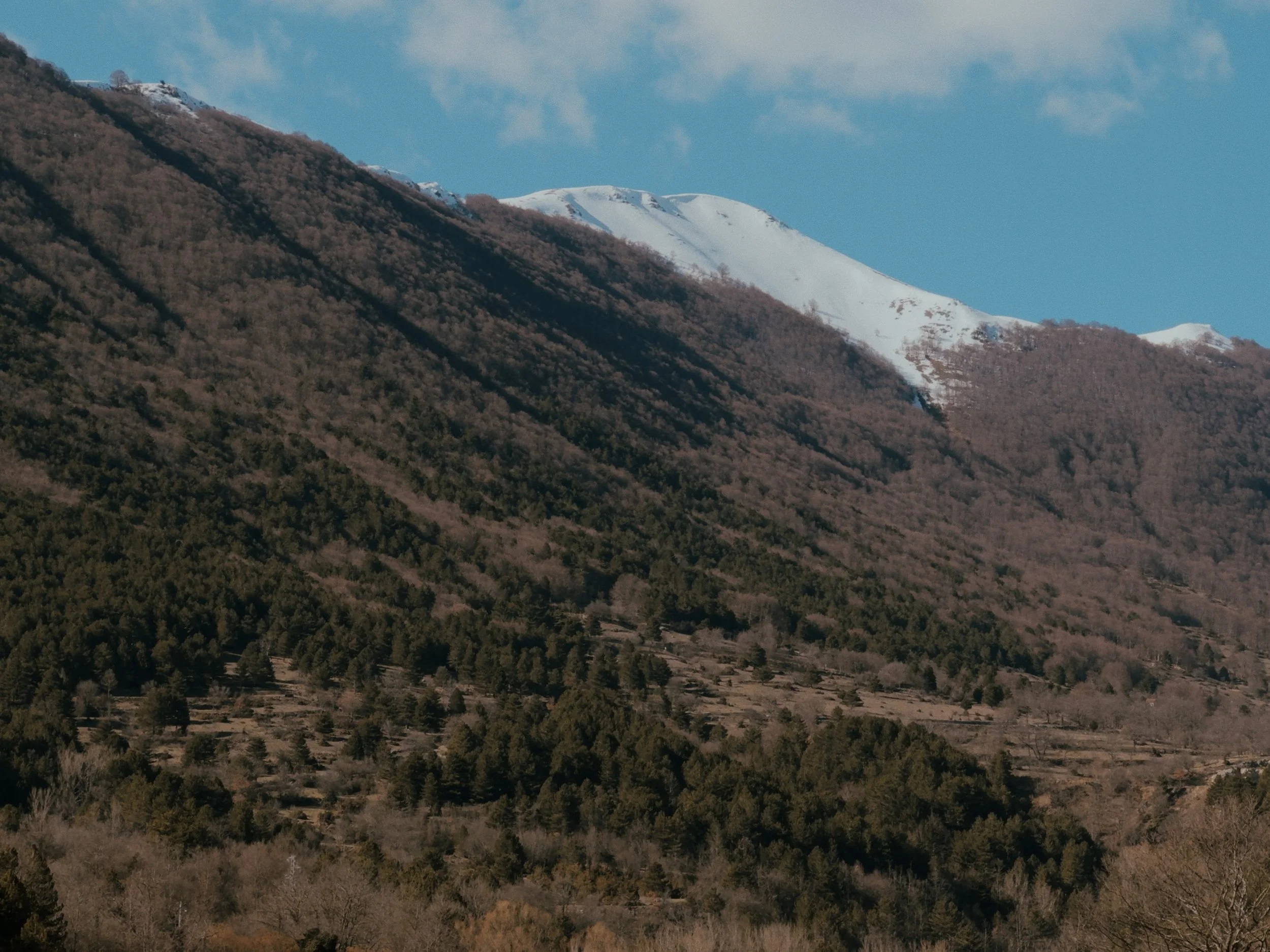
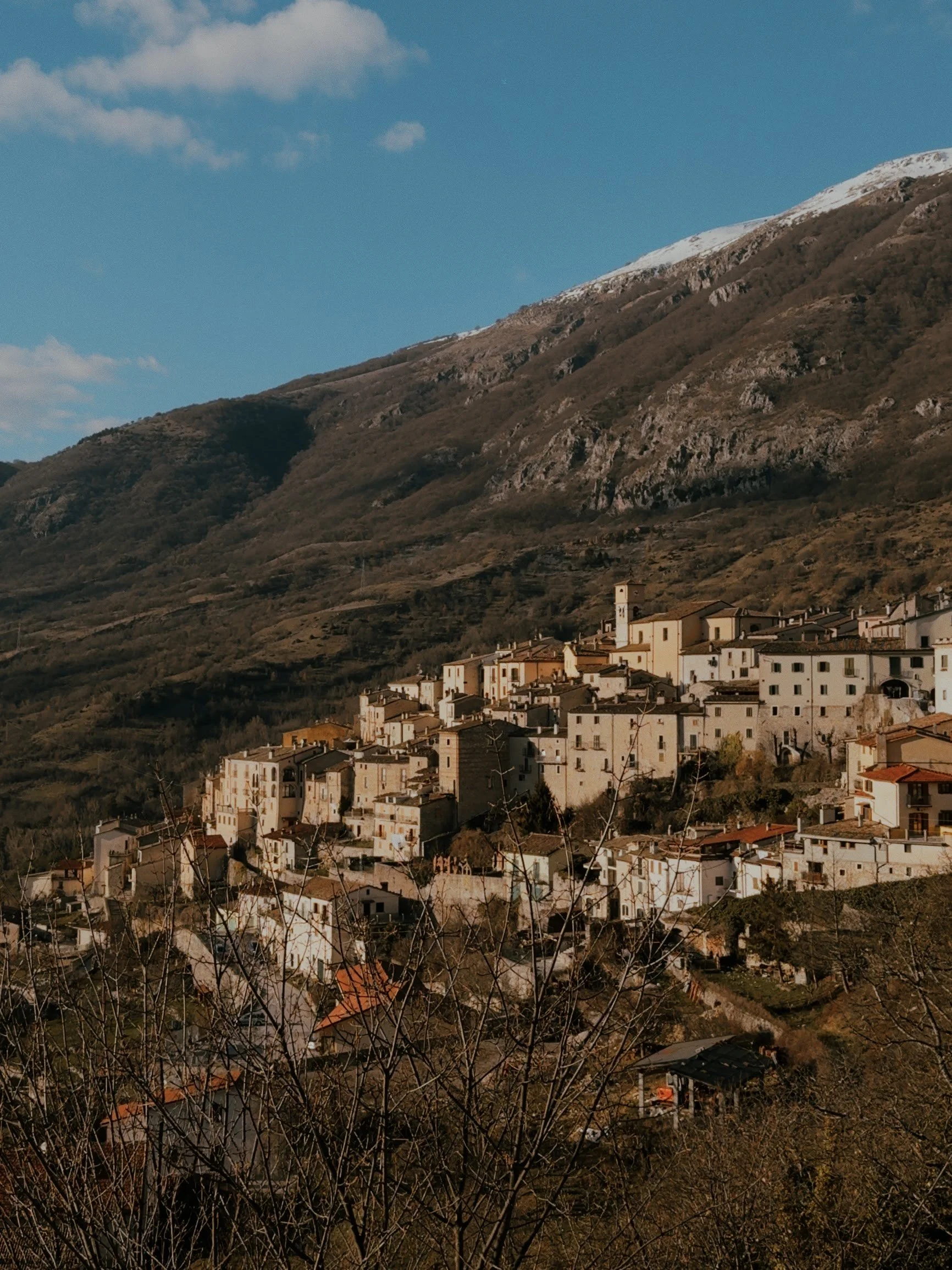
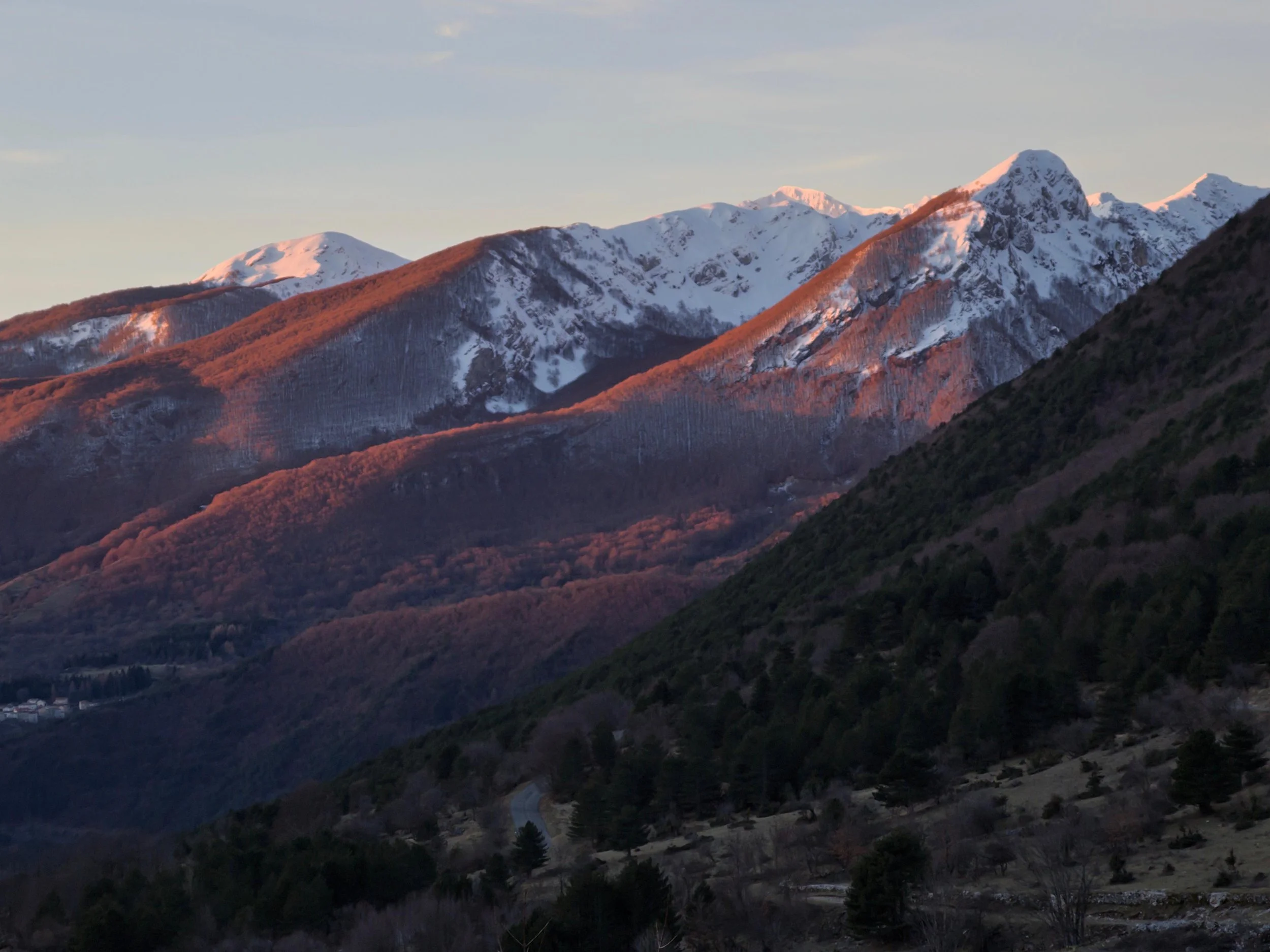
This is Italy’s oldest park. A rugged, fifty thousand hectare, alpine segment of the meandering Apennines, which in February is just as likely to flaunt as good a snowpack as the Alps and has more scenic hilltop villages than there are bears in Abruzzo. The architects and historians amongst us were happy, the nature lovers entranced and the thought of encountering wolves left a heady miasma of excitement lingering as we pushed our way through 2026’s starting bid of 45 days of Devon rain. 

Our typical method of Europe travel is van. A Mercedes Sprinter with enough deep wool blankets to defer the frost nip of a winter’s morning. Good tea, paired with local cheeses, breads and salami once again powered us across France and after a stop in the Alps near Aosta we drove down the Italian peninsula for our first look at the park.

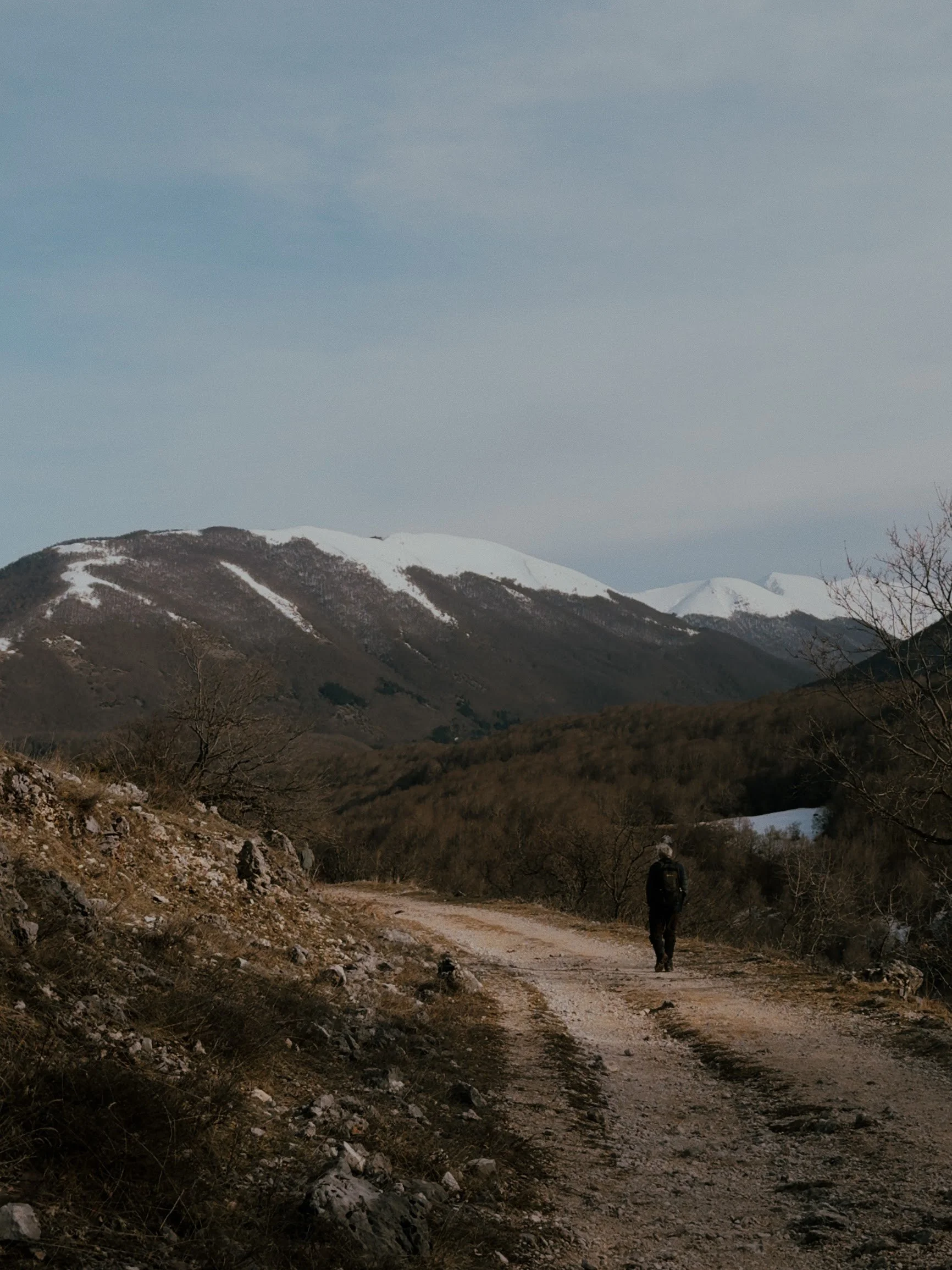
I love travelling by van. We can’t really drive that fast and it gets boring sitting on the tolls, so we always veer off and as many will know, Italy’s hinterland is stunning. A mix of tectonics have moulded and shaped a deeply rugged ecosystem and one can immediately see why the Eurasian Grey Wolf and Marsican Brown Bear  managed to hold out here against such odds. This predominantly human landscape, home to empires, pasta, cypress and olives now sports nearly endless second growth forests and the Apennine chain, an area complex enough for our agriculture to exist on the edge of success links both the Alps to the North through Genova and the incredibly stunning Sila to the south. This set the stage for the Abruzzo national park and as the early spring sun began to drift behind snow clad massifs we wound our way up the switchbacks to Pesscaseroli. 

Sometimes arriving in the dark has its advantages. We met our guides at our neat little hotel. Filippo, a PhD Zoologist, born under Monte Vellino in the agrarian town of Avezzano, right outside the park. Umberto, the capo of the trip. A man with deep stories of bears and wolves, brought up in Pesscaseroli and dedicated to nature, and Francesco, a Sicilian with a wicked sense of humour and a magical passion for wolves. These would be our team and it was obvious from initial handshakes that perhaps something special might happen! 

“So, we have a wolf-watching trip starting at five thirty - who wants to come?”

After ten hours of driving, arriving at eight pm and only just starting to iron out the aches in the back, you’d maybe expect a muted response, but we were here for one thing, European wolves. Maybe we’d see a hunt! All hands went high and we were then treated to an intro about the trip and the projects that this adventure was helping to fund. 

Possibly the most interesting set of slides for me were a series of maps that Francesco showed documenting the rise and fall of the Italian wolf population. No numbers were given, but the graphics told the story, in 1900, the entire mountainous region of Italy had wolves. By 1970 they were driven to near extinction and only a few places, the Abruzzo being one, maintained a population. What then happened was remarkable. 

It seems that a mixture of post war urbanising, reductions in value and viability of traditional lifestyles, a thirst for an easier life and the additionality of European protections on the wolf led to a startling comeback. By the 1990s the wolf had recolonised its former 1900 ranges and by 2020 had filled into almost the entirety of the country and incidentally almost all of Europe. Most of which has been outside of any major national park boundaries. It seems the dispersal utilised this mountainous land and under the cover of a billion trees recovering they wandered across the most developed and urbanised Europe that history has ever known. 

One often expects that you might feel different in a landscape with big carnivores, but past experience has taught me that unless you are alone, you seldom feel the fear of these animals that the myths and legends create. It was this way in Abruzzo. There are no signs telling you to be careful of wolves. The bars are named after them in modern cultural twists of long held coexistence and legend. But, it was achingly obvious that this place has had wolves forever. Everyone knew of them. Everyone has stories of them, but unlike the hearsay and misinformation you hear from those places where they are not, in this landscape they were accepted and for many offered a cultural identity. Imagine that, a farmer being proud of wolves.

This was the story that we heard from one such individual, a too many to count generation farmer called Claudio who has raised sheep and cattle in the park since he was old enough to wield a herding stick. But more on that later. 

Dawn rolled in slowly. I’d slept poorly and the twilight bark of the guardian dogs had turned into the night watch. Perhaps a wolf had come into town. Five am crept up and of course sleep came at four thirty, but with the excitement of an encounter, Bella and I flung ourselves into woollens, thermals, hats and gloves before being whisked off by the team towards a nearby abandoned village to our North. 

Abruzzo’s edge landscape is as fascinating as its beech forest heart. A mixture of tiny field parcels at lower elevations, extensive scrublands of juniper, blackthorn, hawthorn and dog rose at mid elevations and varied open and closed mosaics of orchid rich limestone grasslands and hornbeam–beech forest. Blink and you might think that this was utopia. But, before I go on, the still worked orchards and small scale cultivated fields that were left from years of depopulation created a fascinating patchwork and it seemed that scrub thickets were being used as a restorative method for these tangled re-growths were literally little square compounds, which seemed totally part of the rotation? The edges were manifold and the patchwork quilt of human scale cultivation was completely ‘right’ in the wider grandeur of naturalness. 

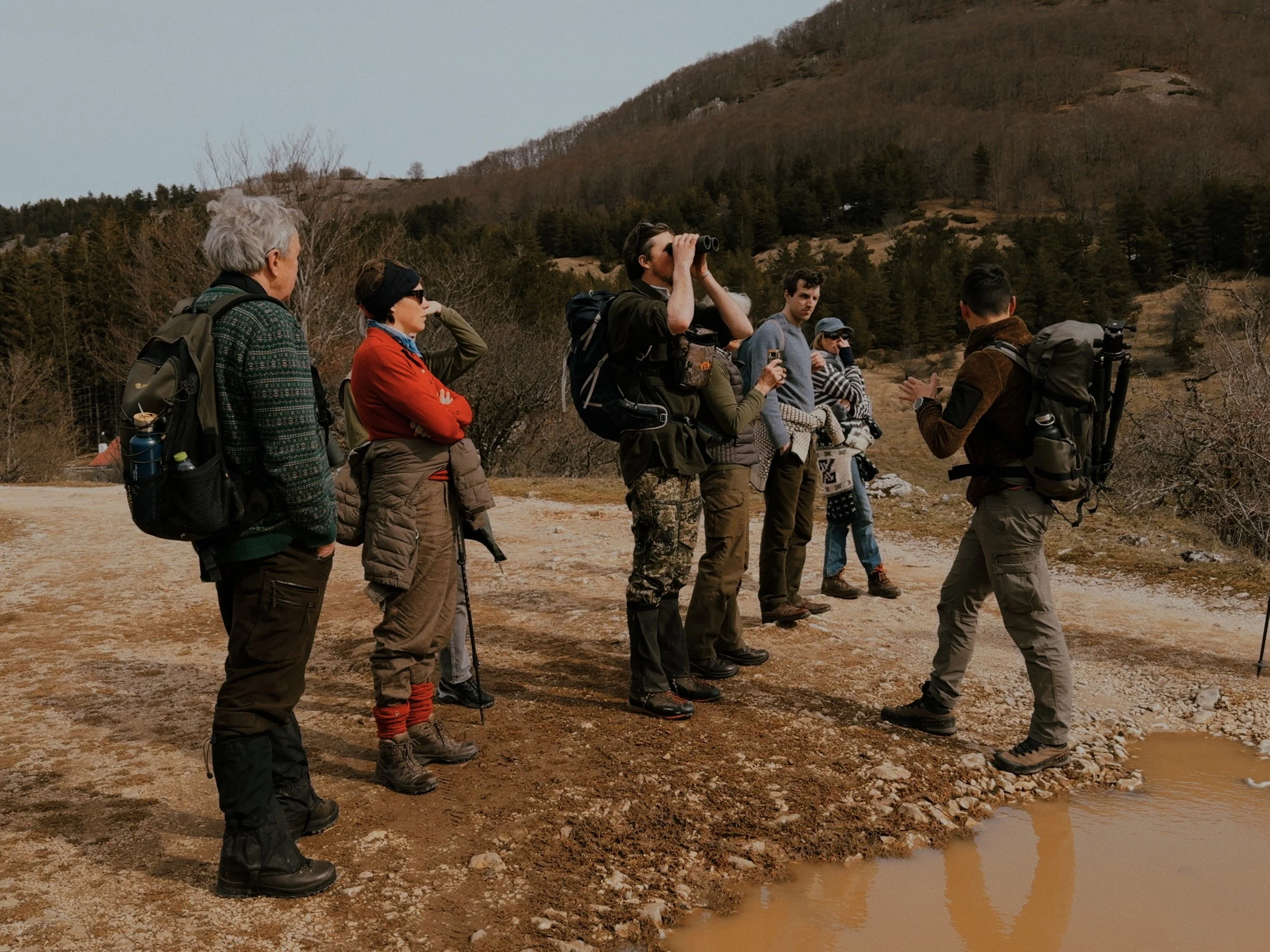
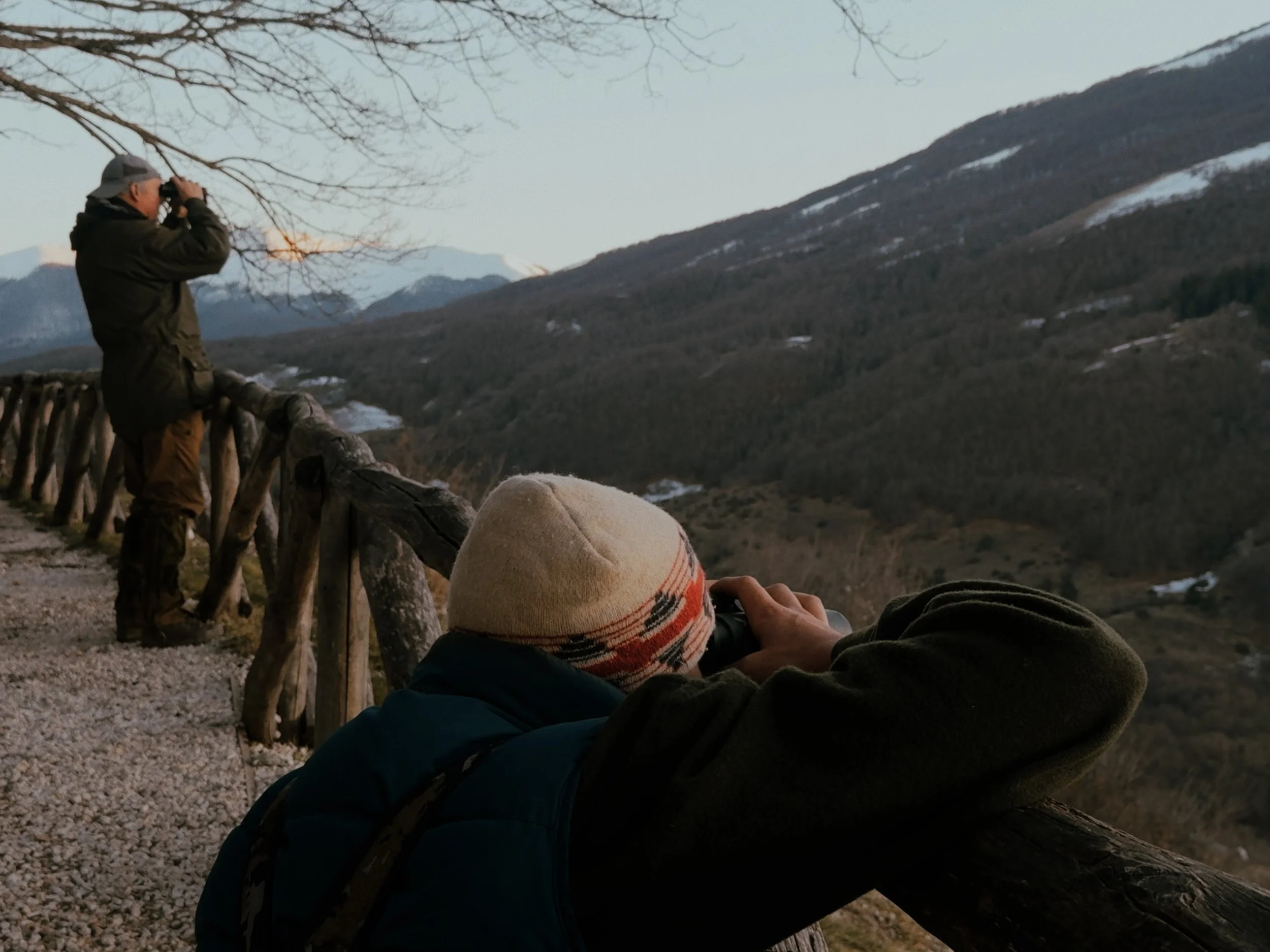
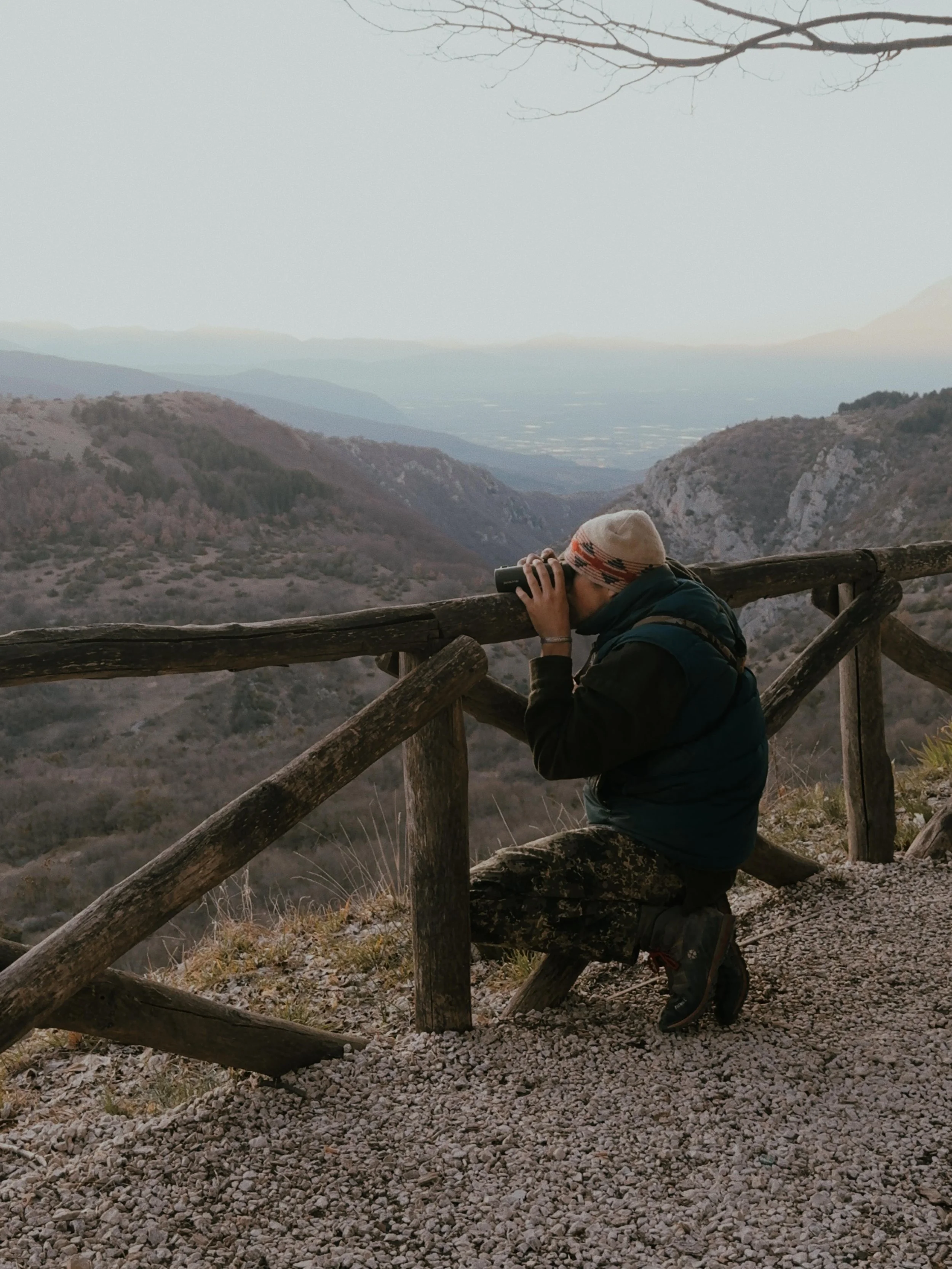
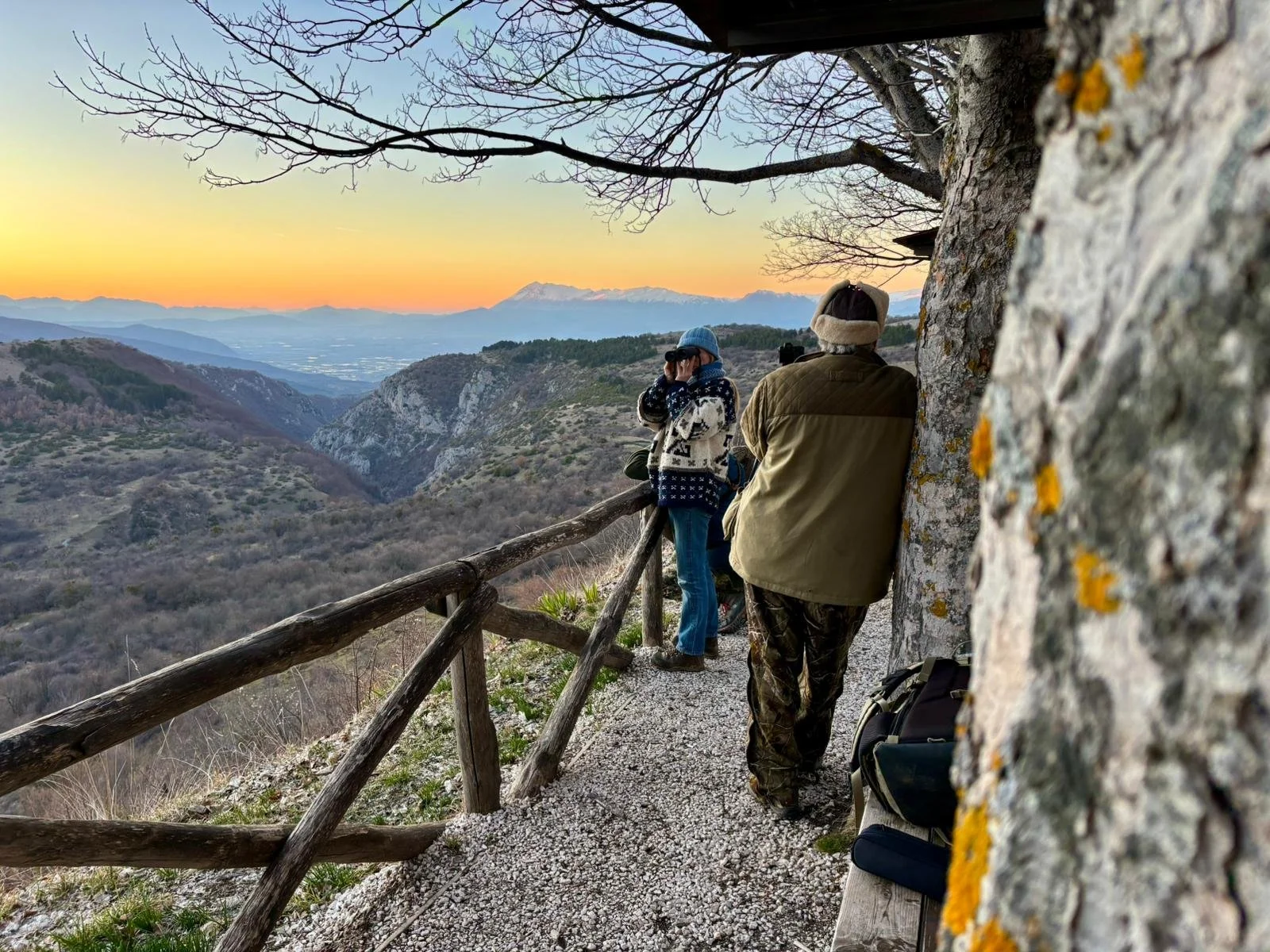
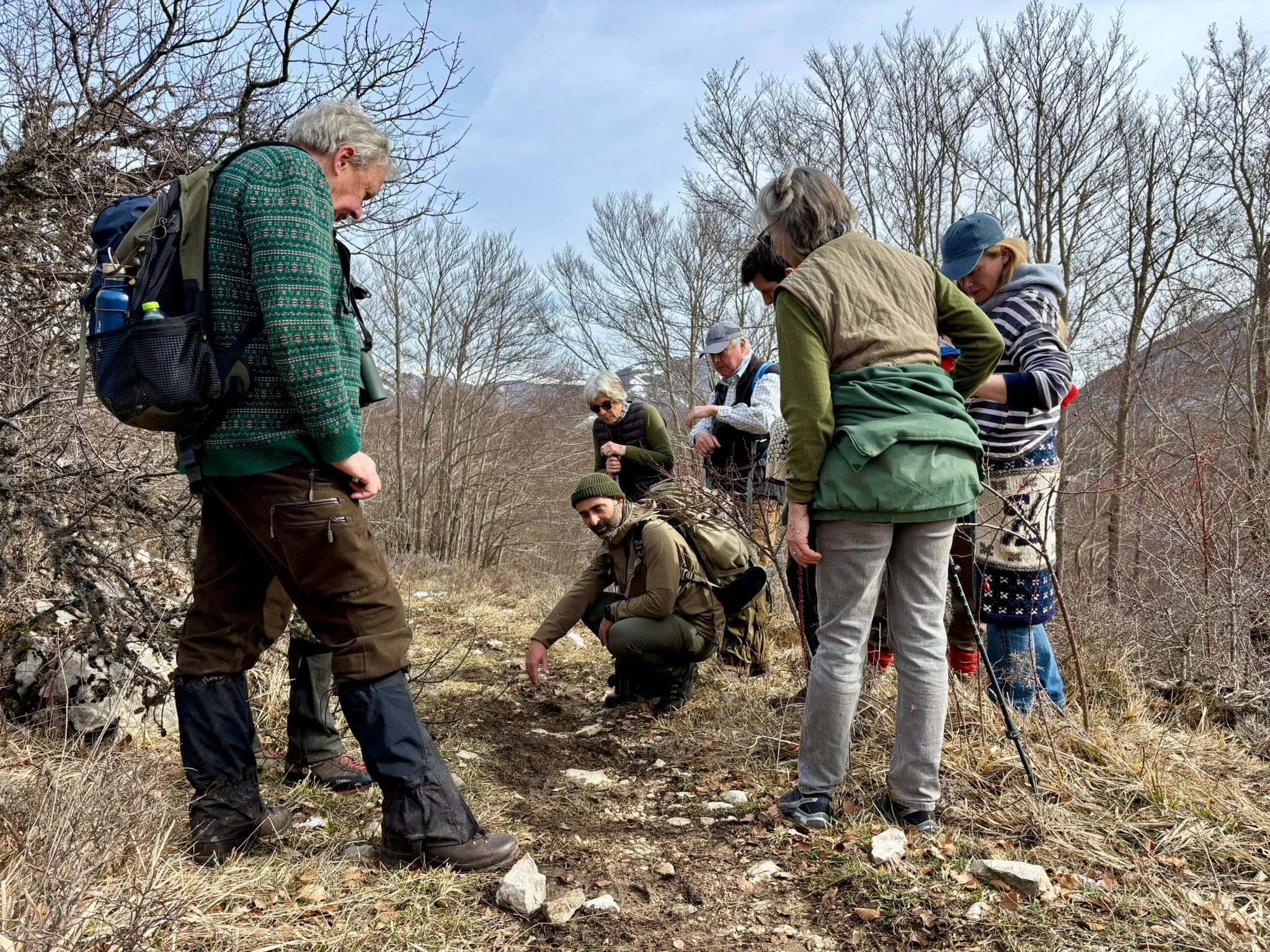
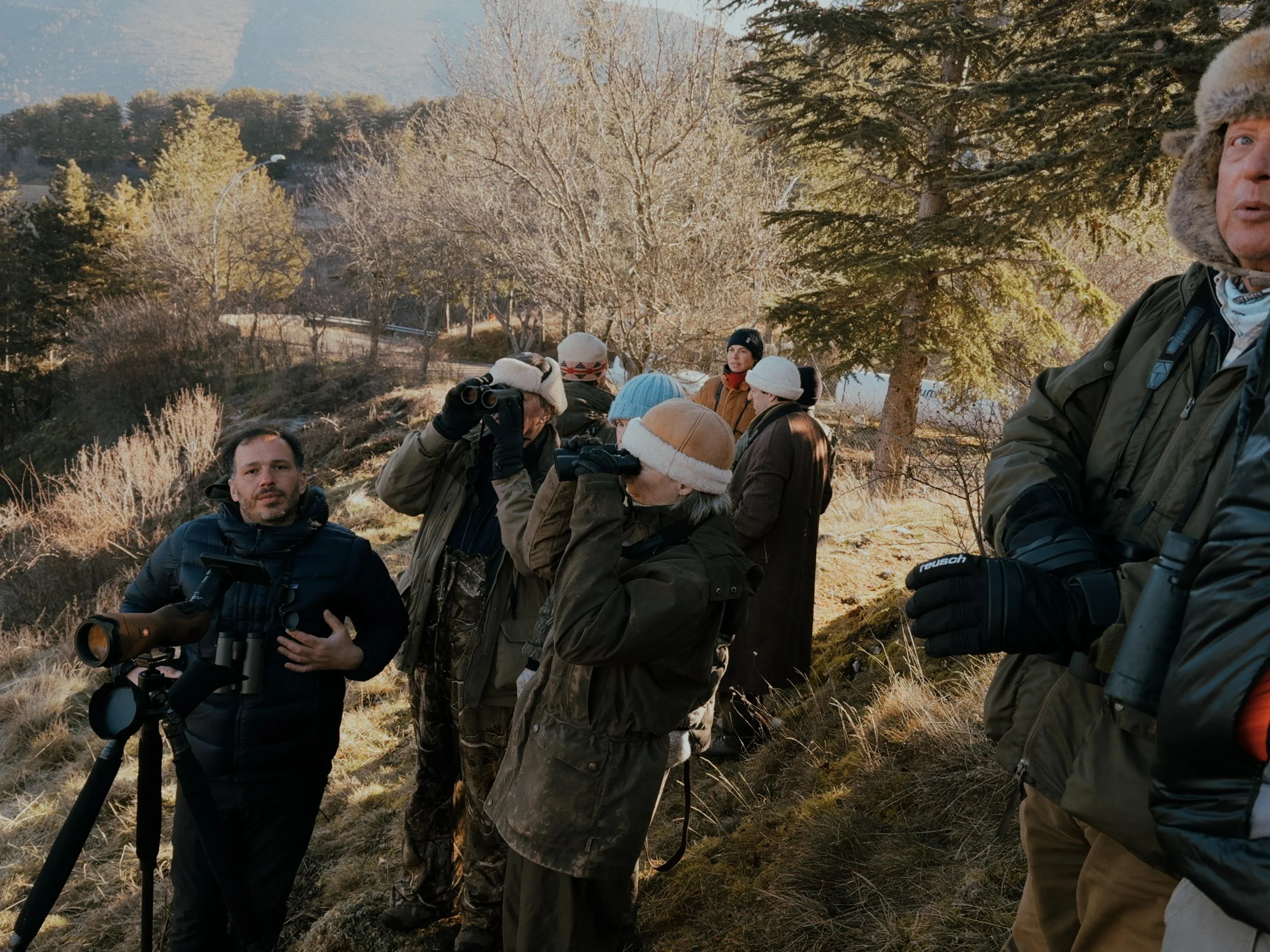
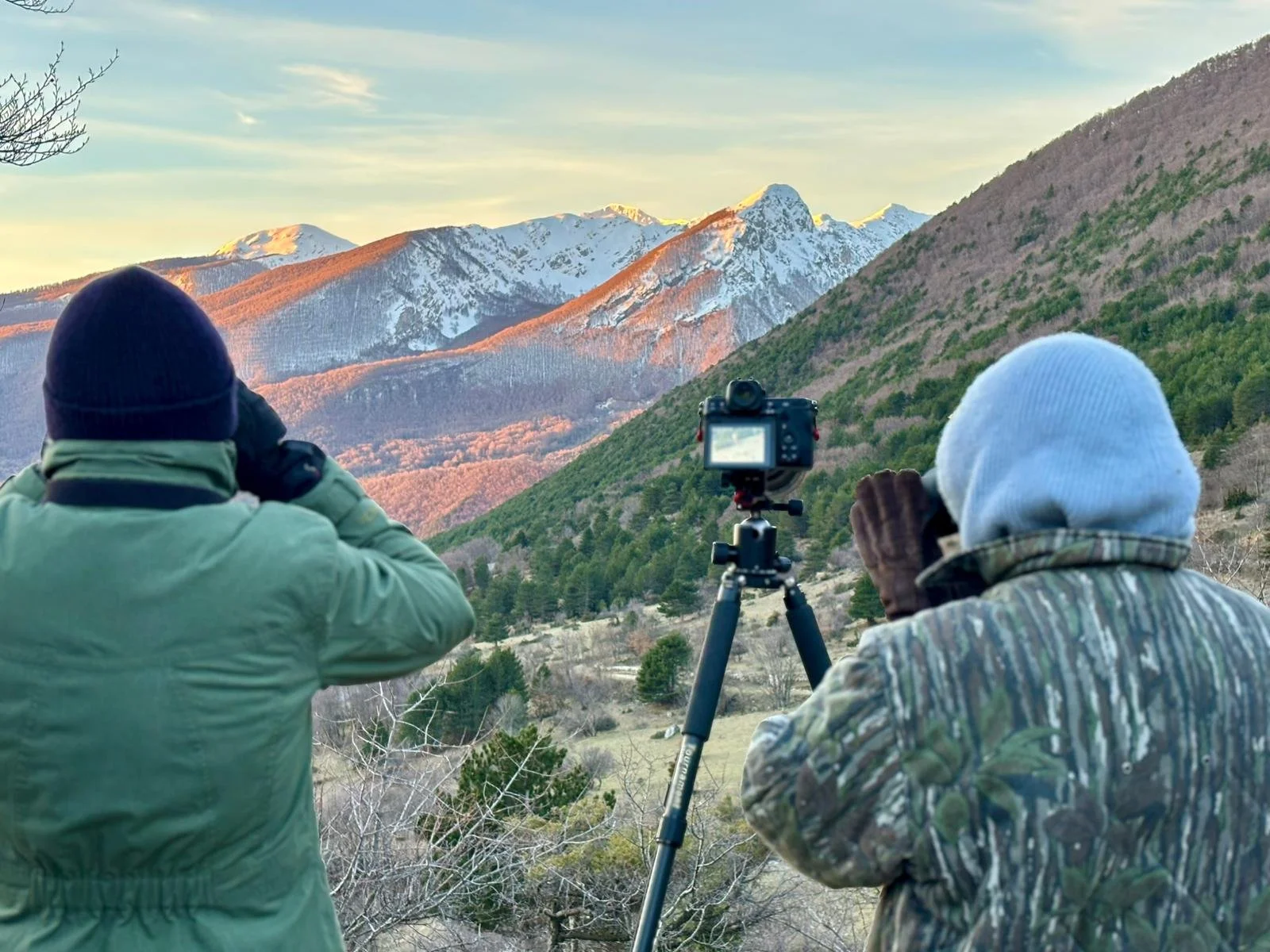
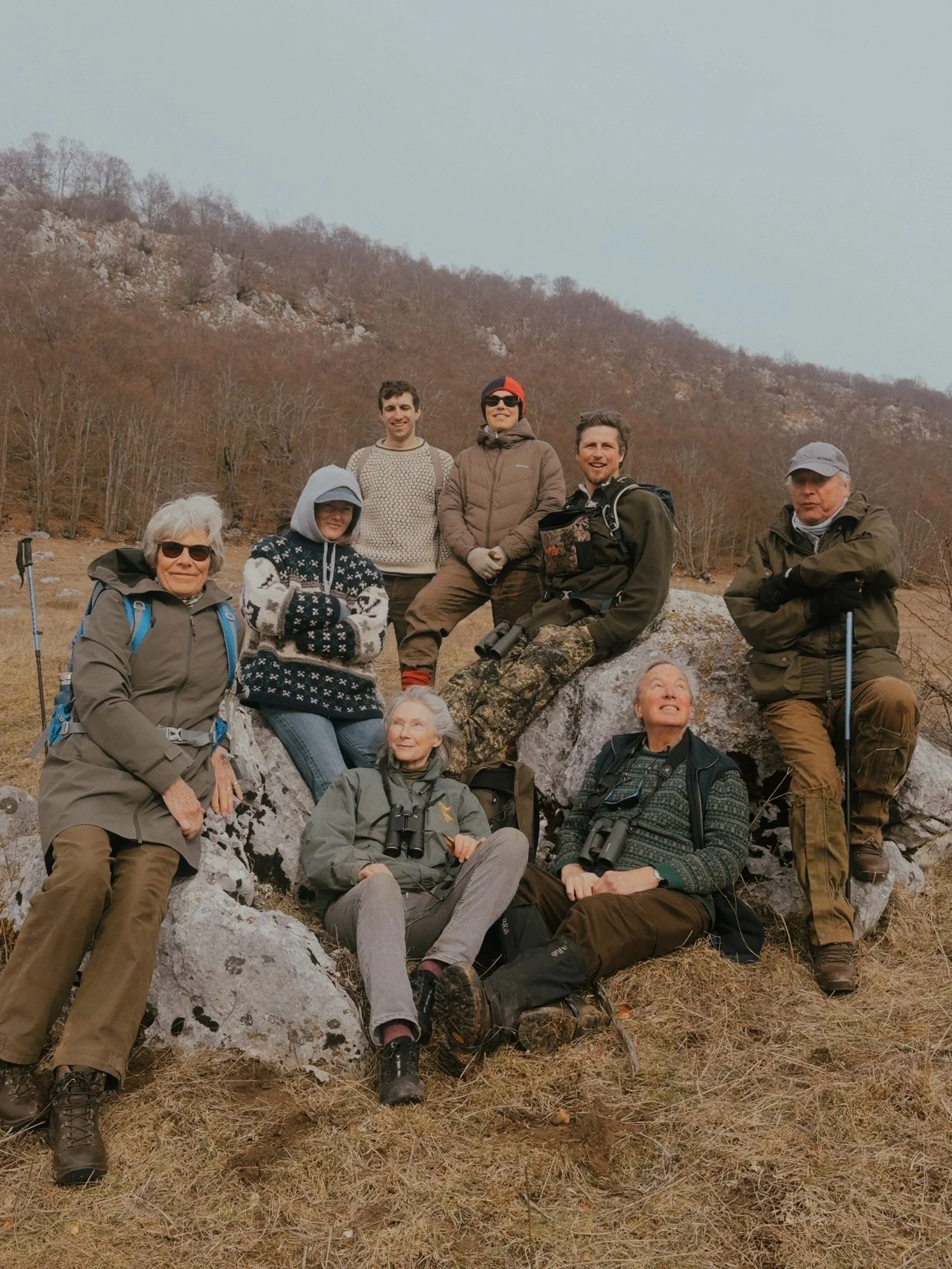
We settled down. For a team of eleven it’s hard to be inconspicuous, but while dusk remained we lined out along a grassy bench and binoculars, thermal imaging and spotting scopes began scanning the opposing hillside.

Filippo saw them first. ‘Red deer, on the horizon,’  he whispered in perfect English. After spending countless hours hunting Reds in the UK it was milliseconds before we locked on and a group of twenty ambled into the advancing dawn.

Red deer were hunted to extinction in Italy and it was not until late 1969 that they were reintroduced to the park. In part this was done to provide the remaining wolf population with a natural prey. Since then the population has fared well and throughout the trip we saw multiple large groups. In Abruzzo they are protected, so they never fall to hunters with the wolf and bear the only main predation pressure their population encounters. But, recent reading has enlightened me to the fact that in many cases, whilst the population is impacted physically in terms of movement and grazing locations, the population rarely becomes severely depleted by natural predation and it is often in landscapes where hunting and natural predation are both in play that the balance can tip. Often, non-human hunted landscapes have fairly high ungulate densities as predators are more curtailed in density by their own territoriality. 

It appeared this way in Abruzzo. After questioning Umberto on what the diet of wolves consists, he told me they take many things, but their favourite prey is wild boar. No doubt they switch to red deer calves in spring, but the sheer scale of the landscape, the multitude of prey species and the expansive area of a wolf pack’s territory mean that it was certainly anything but light on graziers. Each dawn and dusk we saw wild boar, red deer, and roe deer, and over just three days we only covered a tiny microcosm.

African experiences have been the same, so it often confounds me that in the UK we see deer numbers being high as totally a bad thing. Maybe it’s bad now as we have less ancient habitat left, but their curtailing of tree growth is only one side of a very many sided coin.

Across the course of the morning we watched wood lark, cirl bunting, the odd fox, the red deer herd and a few roe, but no sign of the Lupo. Cold yawns were the signal from us to the guides that it was breakfast time.

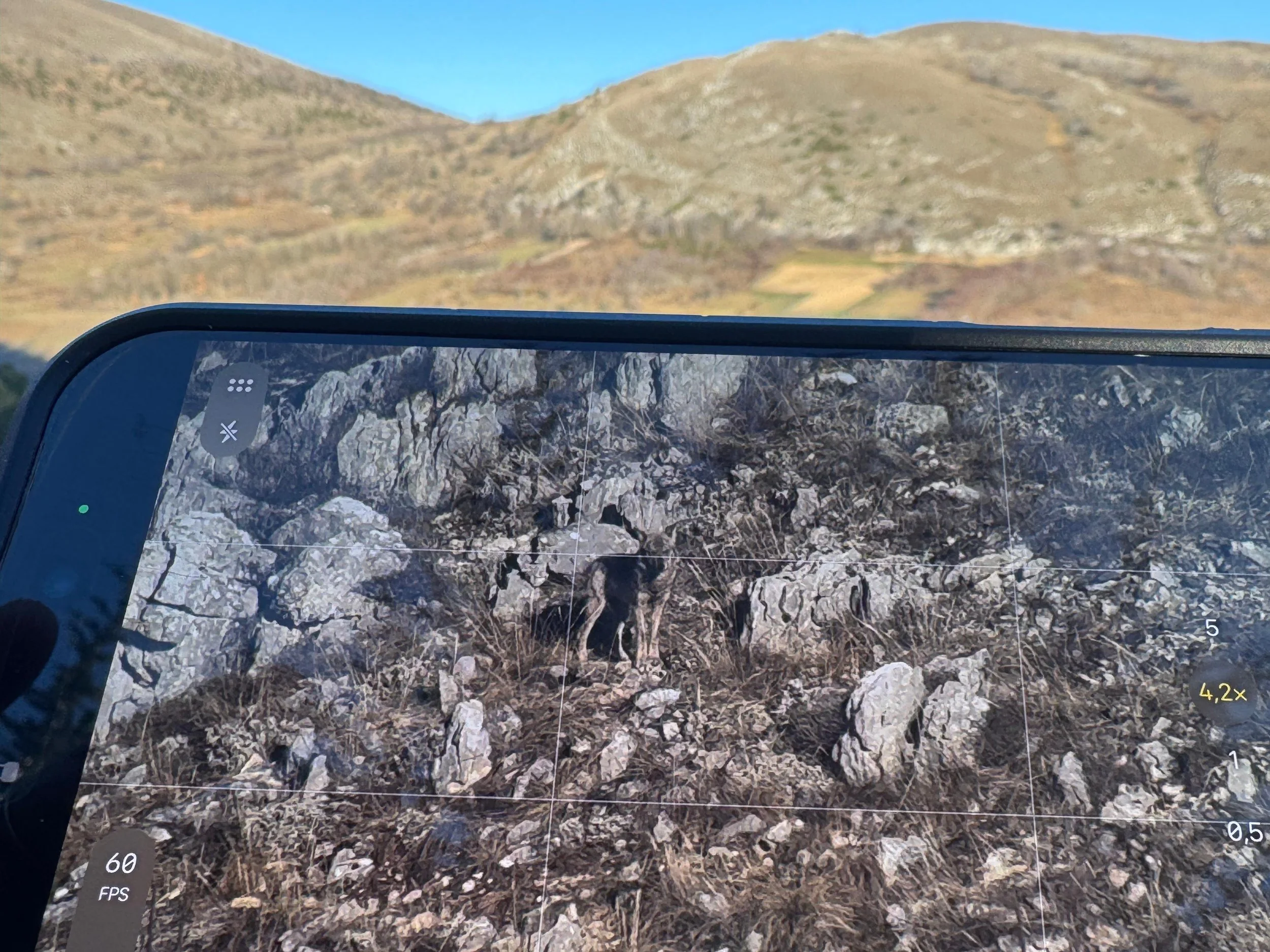
It was mere seconds after we turned onto the main road that Filippo’s phone buzzed. Wolves! Francesco and Umberto, ahead of us, has scanned the thermal across a scrubby slope and only a hundred metres away was a male with his ears pricked.

We arrived moments later and rapidly grabbed binos. The pack of now five rounded a bluff and briskly trotted through the old scrubby farmland and off into the morning warmth. 

That was it. Wild wolves moving through the landscape with amazing purpose and clad in wonderfully camouflaged coats. The perfect mirror to the russets, umbers, greys and silvers of grass, shrub and rock which they flowed through. Captured video of the encounter which we scoured over and over again told so many stories. Pack leaders, tails held high, redder, broader and evidently engaged in the move, with other individuals more wary, stopping every so often to glance our way and in so doing generate that unspoken urge to keep on the move and avoid the lingering doubt of human aggression present in nearly all animals today. 

Francesco, Filippo and Umberto were ecstatic and it was here that the bond of friendship was cemented. We all knew what we saw was special and that this little team, drawn to this wonderful part of Italy, were both relieved and joyous that the trip had started so well. 

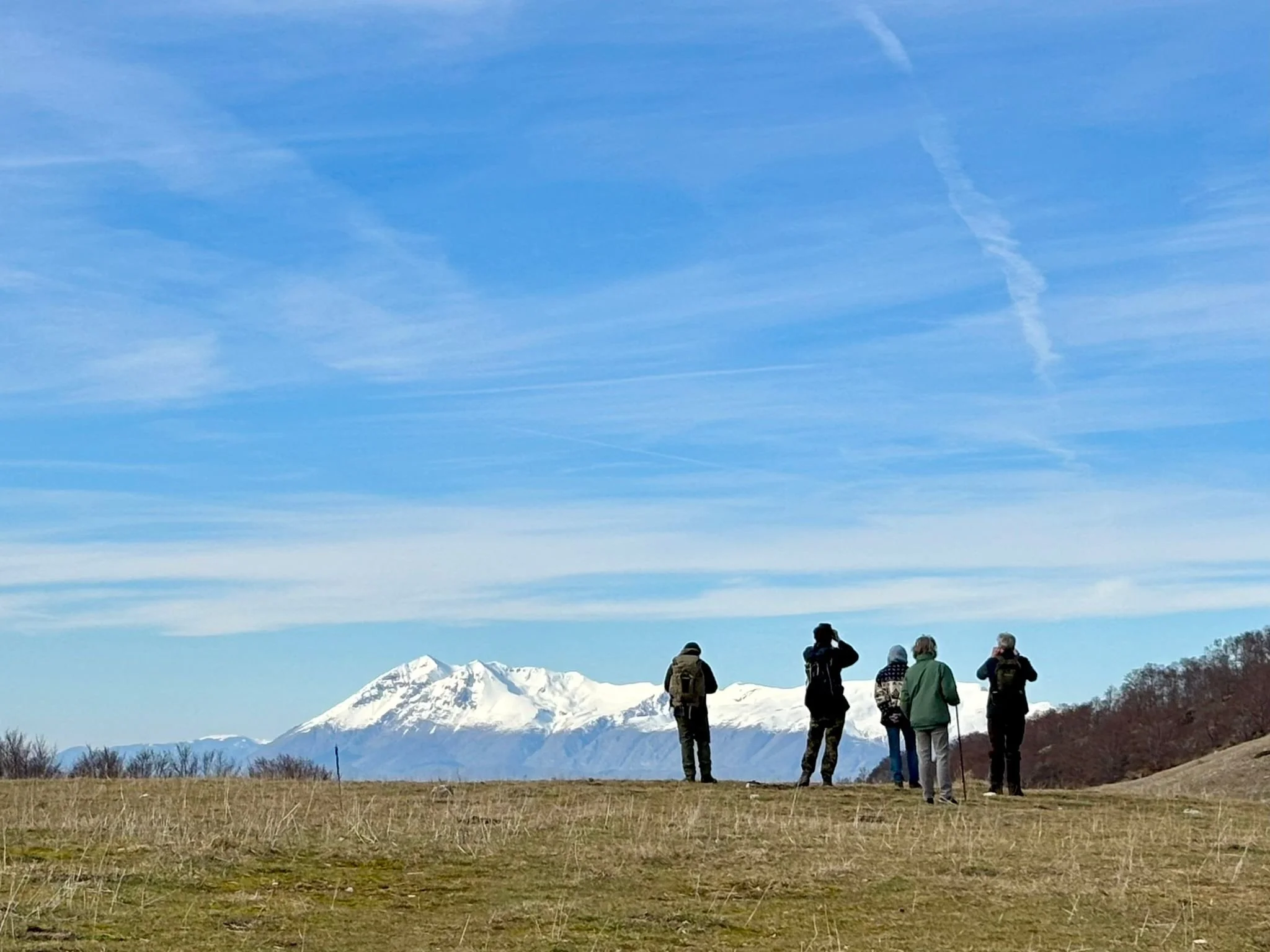
From here a pattern of days began to emerge. Dawn sessions, midday hikes and sunset scans punctuated the rhythm of planetary spin and we had soon notched up a surprising amount of species despite being before the northward migrations of March and April. 

Highlights of large sounders of wild boar - in Italian they are called Cinghiale (ching-gee-arr-le). A huge male we saw one night was nicknamed king Cingh in honour of his impressive mane and extensive earthworks - herds of red deer, dippers, kingfisher, wood lark, woodpeckers, roe, it all seemed so familiar and yet the setting was starkly at odds to our regimented landscape of monotonous blue-green silage fields. 

The final night before the last morning we shared dinner with the guides and talked extensively about factors facing large predator recovery across Europe. Griffon vultures were being poisoned, wolves too. Revenge killings occurred, hatred was an undercurrent, but there was also great hope and the numbers don’t lie. They are all in a better position than thirty years ago. A huge topic we covered was the lack of cultural knowledge of coexistence when predators return to areas from where they have been extirpated. It was this factor which resonated strongly as it was very obvious that where the wolf and bear have somehow held on, the response has been one of shared land and rights.

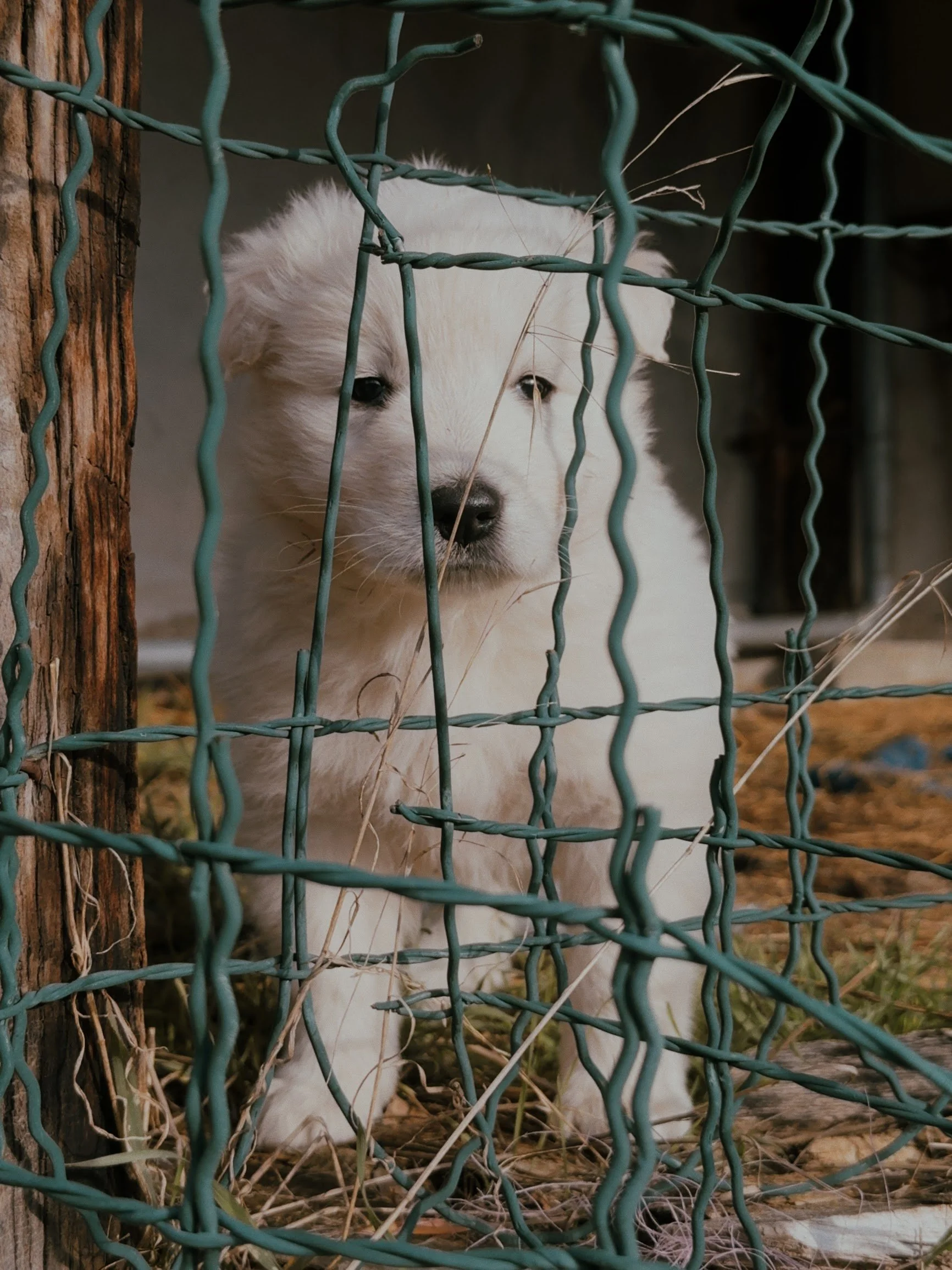
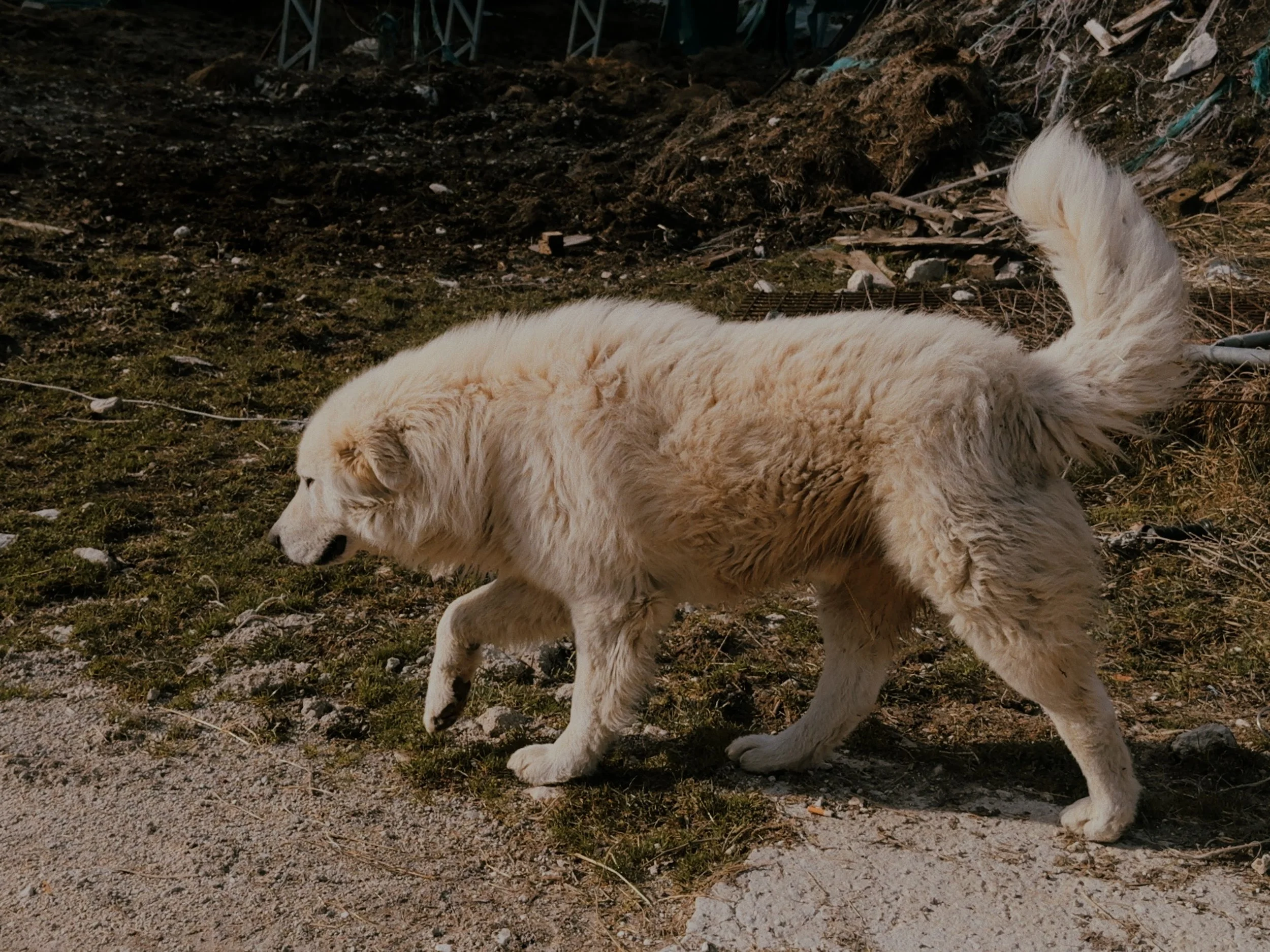
As they spread however, mainly through unprotected lands, the job of safeguarding their role in the food chain can be harder to protect and our presence in Abruzzo was playing some small part in this as Francesco under the NGO banner of Io Non Ho Paura Del Lupo (I’m not afraid of the Wolf) alongside Rewiliding Europe and others created networks to educate and bring together those who may be affected by wolf return. This went even as far as ensuring good strong lines of guardian dogs (the famous maremmano-abruzzese) were maintained, training was given and over five tons of dog food was donated to farmers and herders working in wolf terrain.

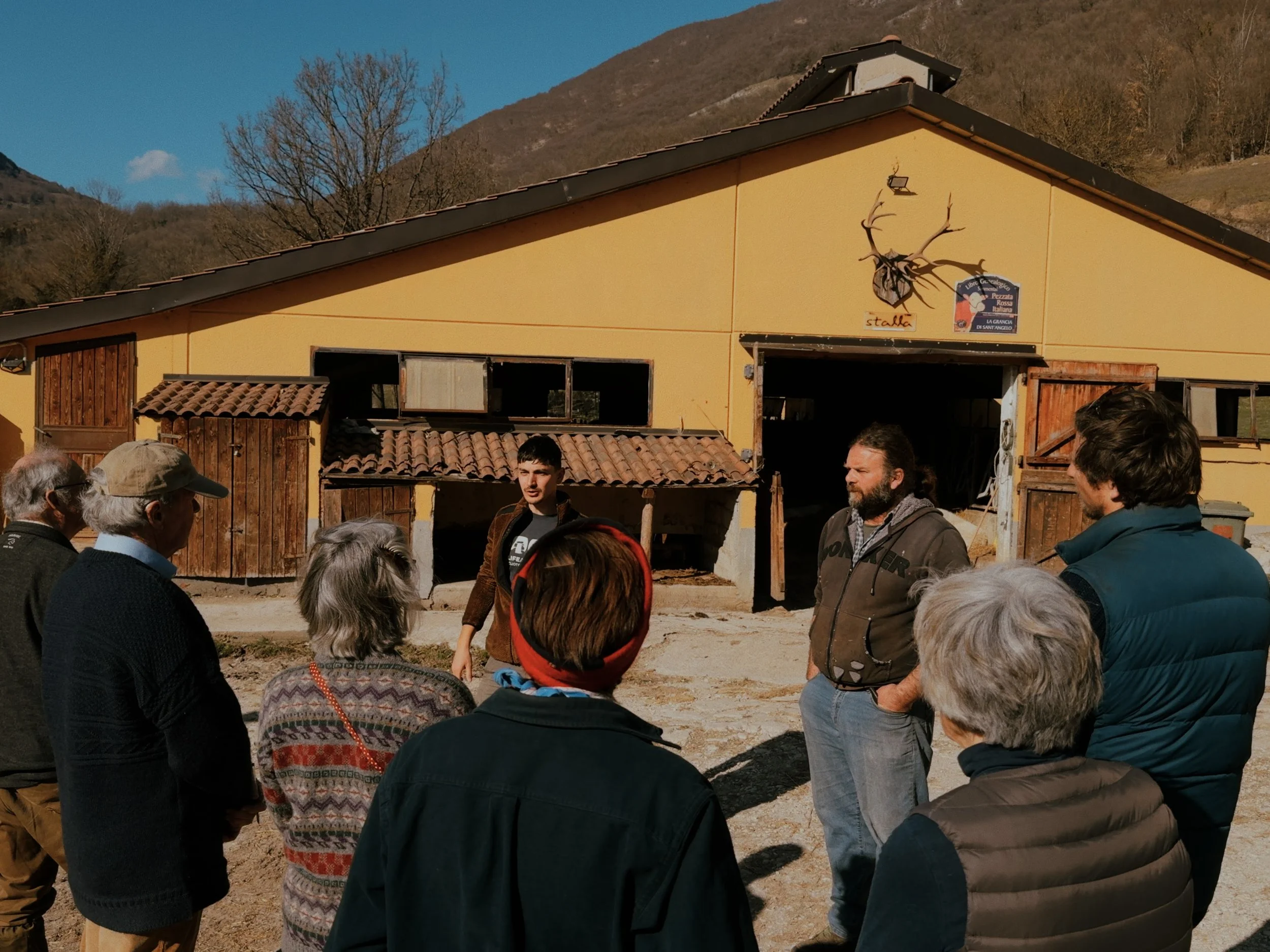
Re-enter Claudio. His farm is in the middle of the park. In the heartland of the comeback story. Bears and wolves are there day in day out. Filippo, expertly translating, took questions from us all, which ranged from; What type of cows he had? How much milk they produced? How many hectares he could graze? Did anyone still herd the sheep? 

Finally we got to the inevitable wolf questions. Yes he did have livestock taken. Only 3 months ago a lamb. But with a six strong guardian dog team he said that the predation, if it occurred, was often highly opportunistic and incredibly scarce. Cows were basically never attacked and their calves can be taken, but only if they wandered off from the herder or dogs. Male marremanos were integral to the guardian dog pack. They piss everywhere, just like the wolves and create a territory themselves, which overlaps their wild counterparts. When they move to new areas they fan out and essentially declare their interest in a valley. This maintains a constantly evolving spatial complexity where the wolf pack know that if they want to mess with the farmers, they’ve got to get past the dogs, past the people and maybe then they’ll get a meal. As noted before, his tone never changed. He was not angry at the wolf and of course, as is so often the case in shared lands, it was completely evident that he respected and admired the animal for its intelligence, bravery and strength. 

Despite it being a constant reality of life I felt that the wolf was part of him and if it were to be gone, a large part of his soul would be gone too. No doubt life would perhaps be simplified. No need for all that dog food. But, in deciding to work with the wolves, play their game with his domestic dog pack and therefore be a tangible part of the ebb and flow of the ecosystem, he represented one of the few times in my life where I have seen a golden thread to true coexistence. His sheep and cattle maintained insanely rich grasslands and scrublands, the hay he cut was reaped from what the sun and moisture provided and his produce of exceptional cheese could be produced day after day after day, tinted with the tastes of the wild hills of Abruzzo. 

We sat in the cold light of the last day as dawn broke once again over same hill we started the adventure. Three wolves were active in the panorama. One, like a serenely content dog, sunned itself on a rock, his head popping up every now and then. Another breezed over the ridge and was gone and a youngster gently picked his way up to the male after skirting the farmland. If you own dogs you can’t help but be fascinated by these creatures. Their mannerisms are so familiar. Of course they can be fierce and no doubt they are a worry for farmers. But here in Abruzzo, with the guidance of Umberto, Filippo and Francesco, perhaps we had stumbled across something close to what true coexistence could look like. 

Next
Next

We Are Not Separate From the Land: Designing Abundance, Not Decline, Through Indigenous Stewardship