
When the Moor Calls Home ~ Traditions of Transhumance
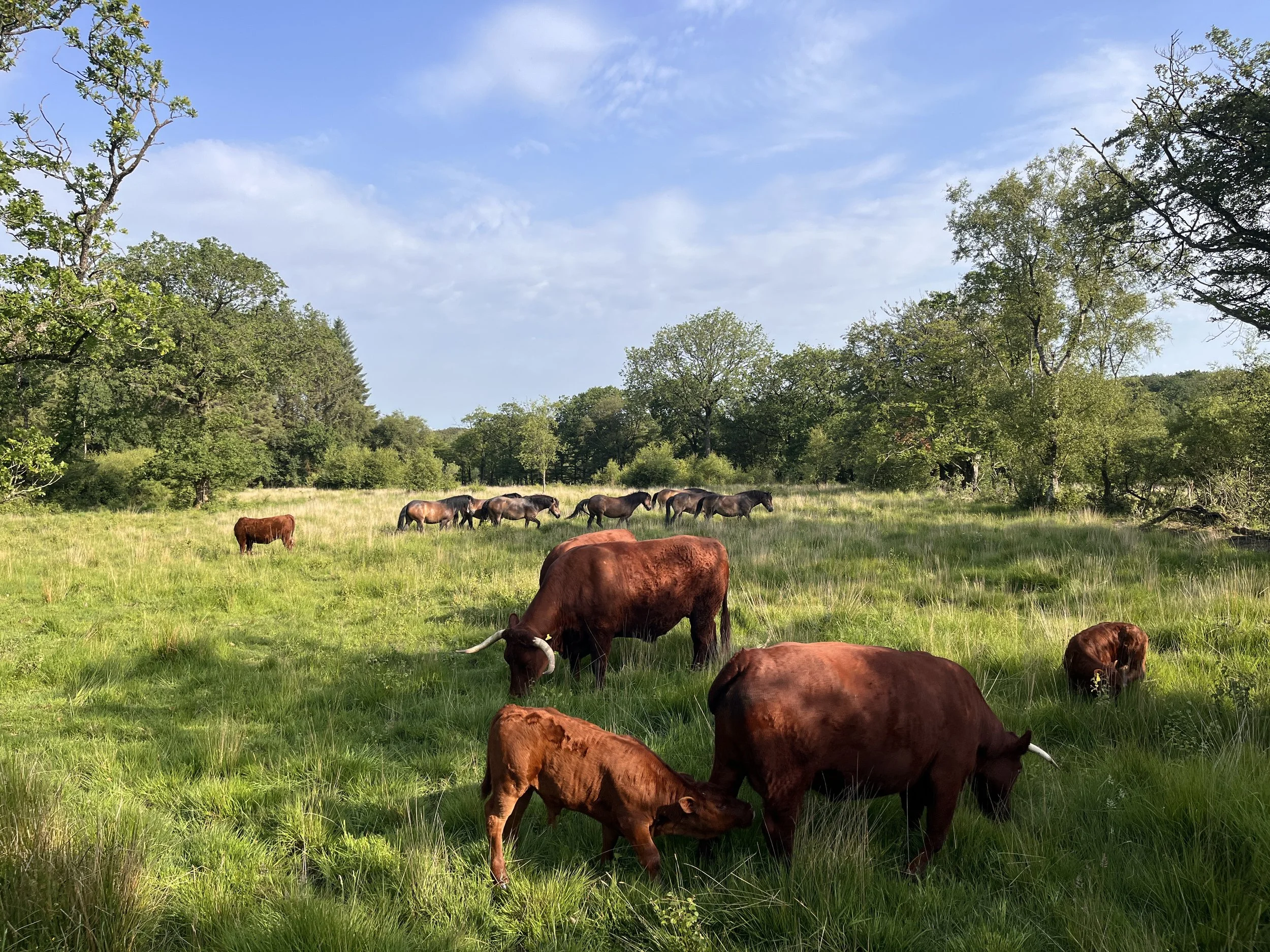
Grazing amongst the ponies ~ June 2026
Every year, long before most people have even stirred, we gather in the farmyard. Deep indigo and navy blue give way to glowing bands of pink, orange and gold, moments before the sun breaks over the horizon. Sleepy mumbles drift through the yard as horses are saddled and gates are opened. Tui is already brimming with anticipation.
By 5.00am, we're moving.
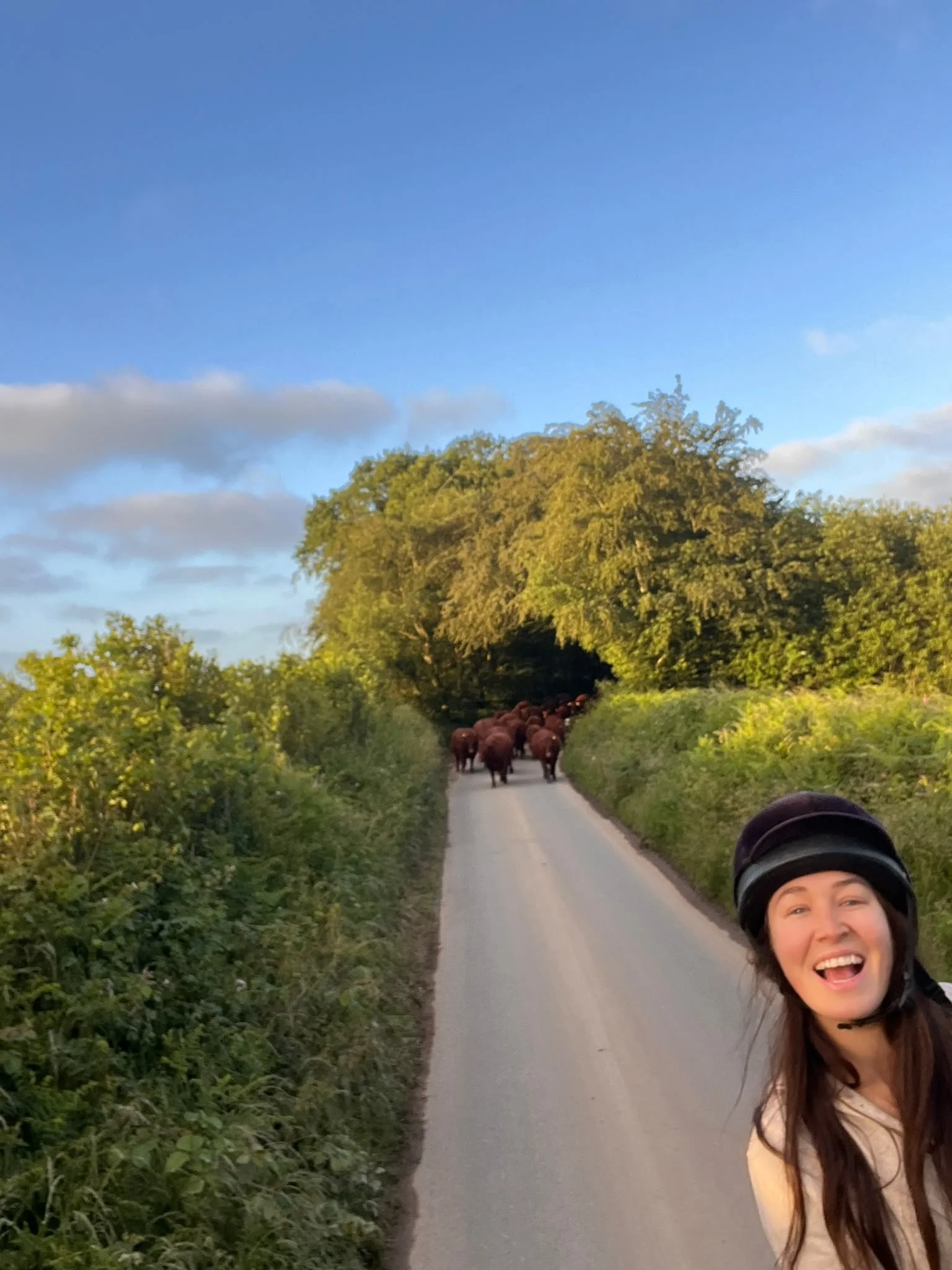
More wranglers join us along the route, each taking up their assigned gateway, lane or corner. Everyone has a role to play - holding a gate, guarding a prized rosebush in the village, keeping an eye on the herd or gently guiding them past driveways and crossroads.
There is no transaction, only a shared experience that reminds us our place is not above the landscape, but within it.
Droving is an ancient practice known as transhumance - the seasonal movement of grazing animals between lowland farms and higher summer pastures. For thousands of years, communities across Britain and the rest of the world have followed these same rhythms.
It feels tribal.
In a time where we spend large parts of our day to day lives spent behind screens, there is something deeply grounding about becoming completely immersed in a task that demands every one of your senses. You listen constantly. You watch every movement. You anticipate what the herd might do before it happens. You read the landscape, the weather, the horses, Tui, your fellow wranglers and the herd themselves. For a few precious hours, the rest of the world simply disappears.
Leading much of the conversation is Tui.
Tui seems to speak a language understood only by cattle. She doesn't bark endlessly or charge around creating chaos. Instead, she applies just enough pressure, appears exactly where she's needed and somehow persuades the herd that walking forwards is entirely their own idea.
She needs space to do her job, and she needs our trust. We learn to stay out of her way, allowing her instincts to guide the herd while listening carefully to Bella's commands. Most of the time, Tui responds instantly - although, like all good farm dogs, she occasionally reminds us she has a mind of her own.
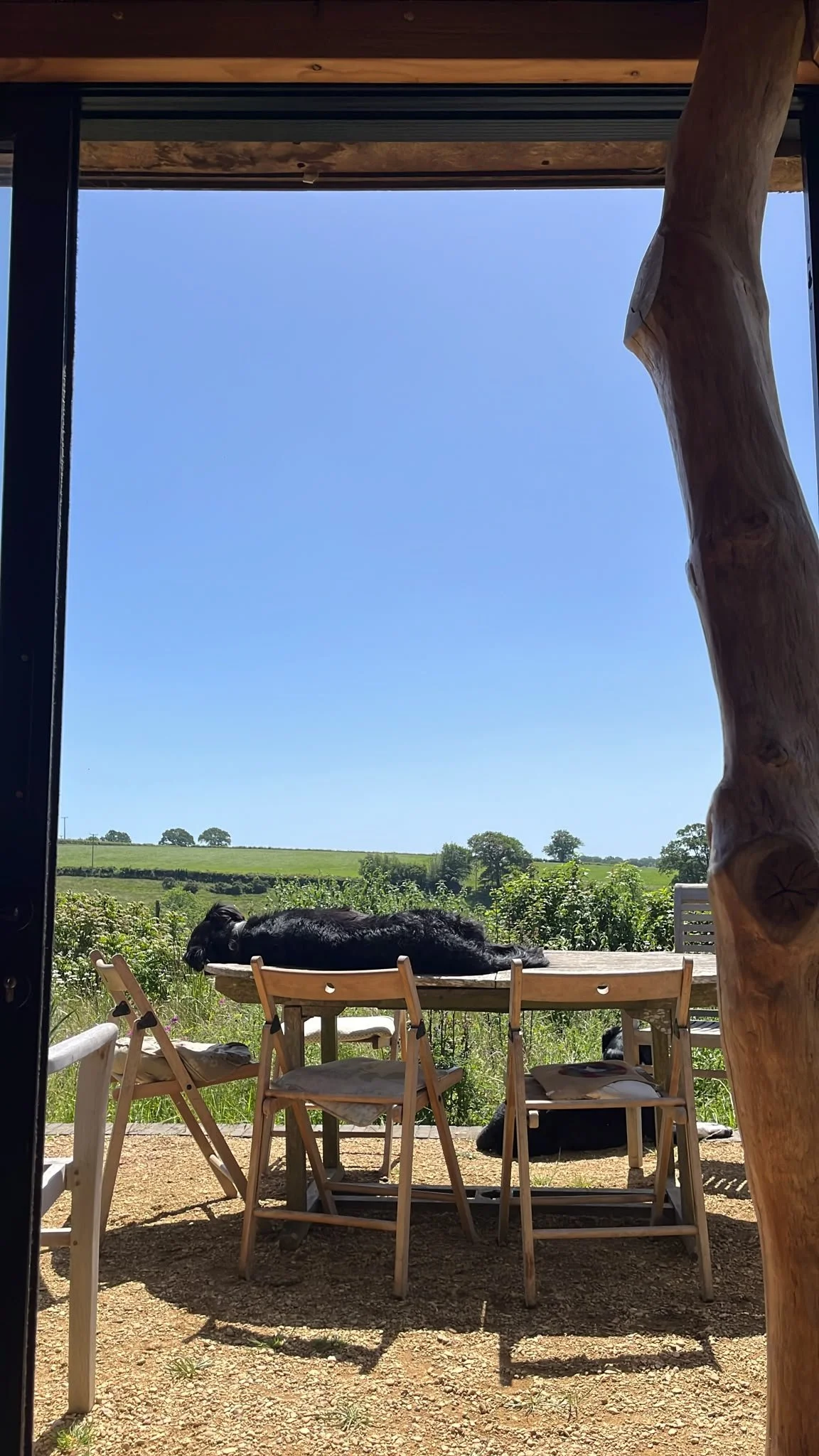
Tui taking a well-deserved post drove nap.
This year brought another magical addition.
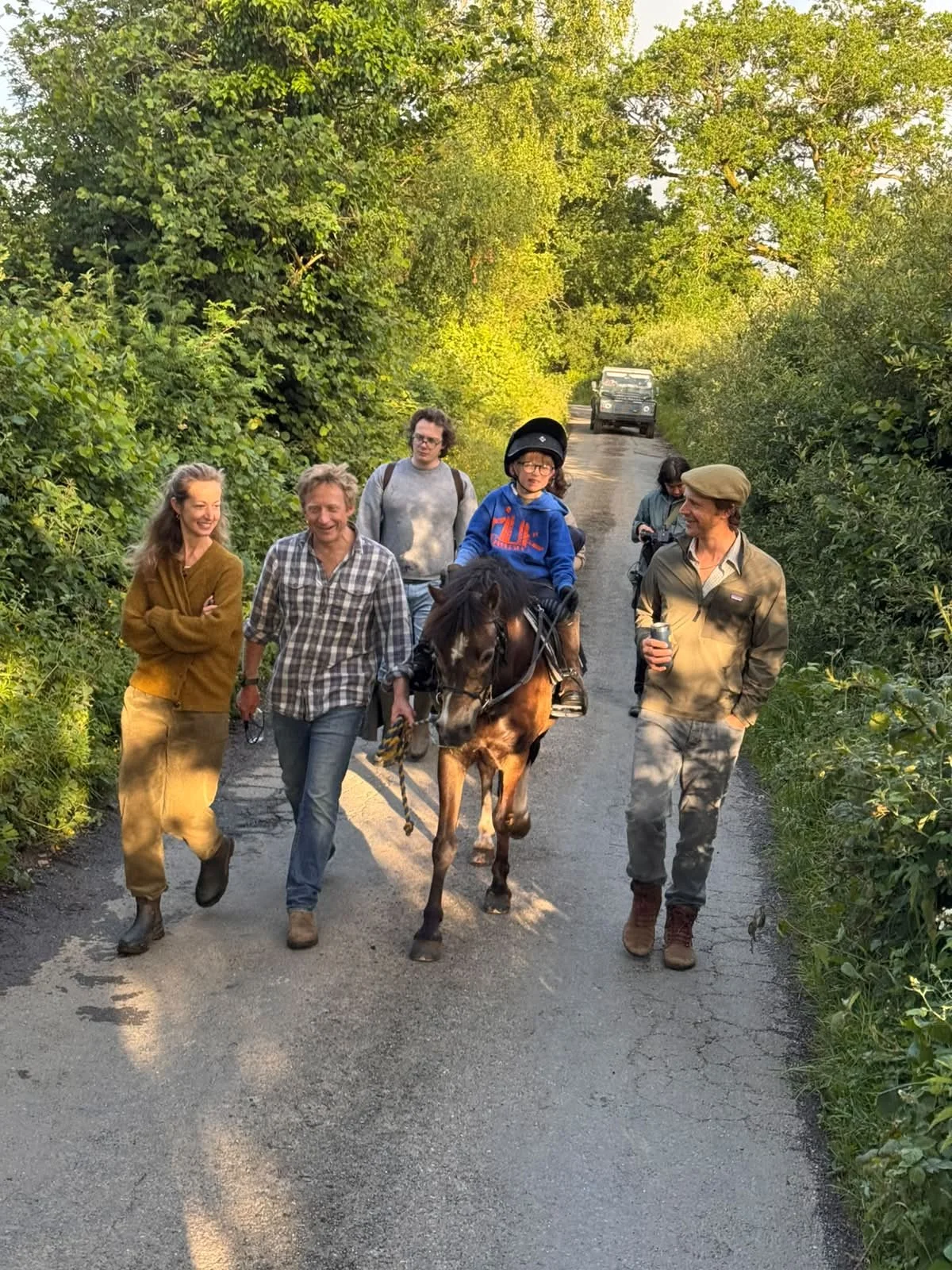
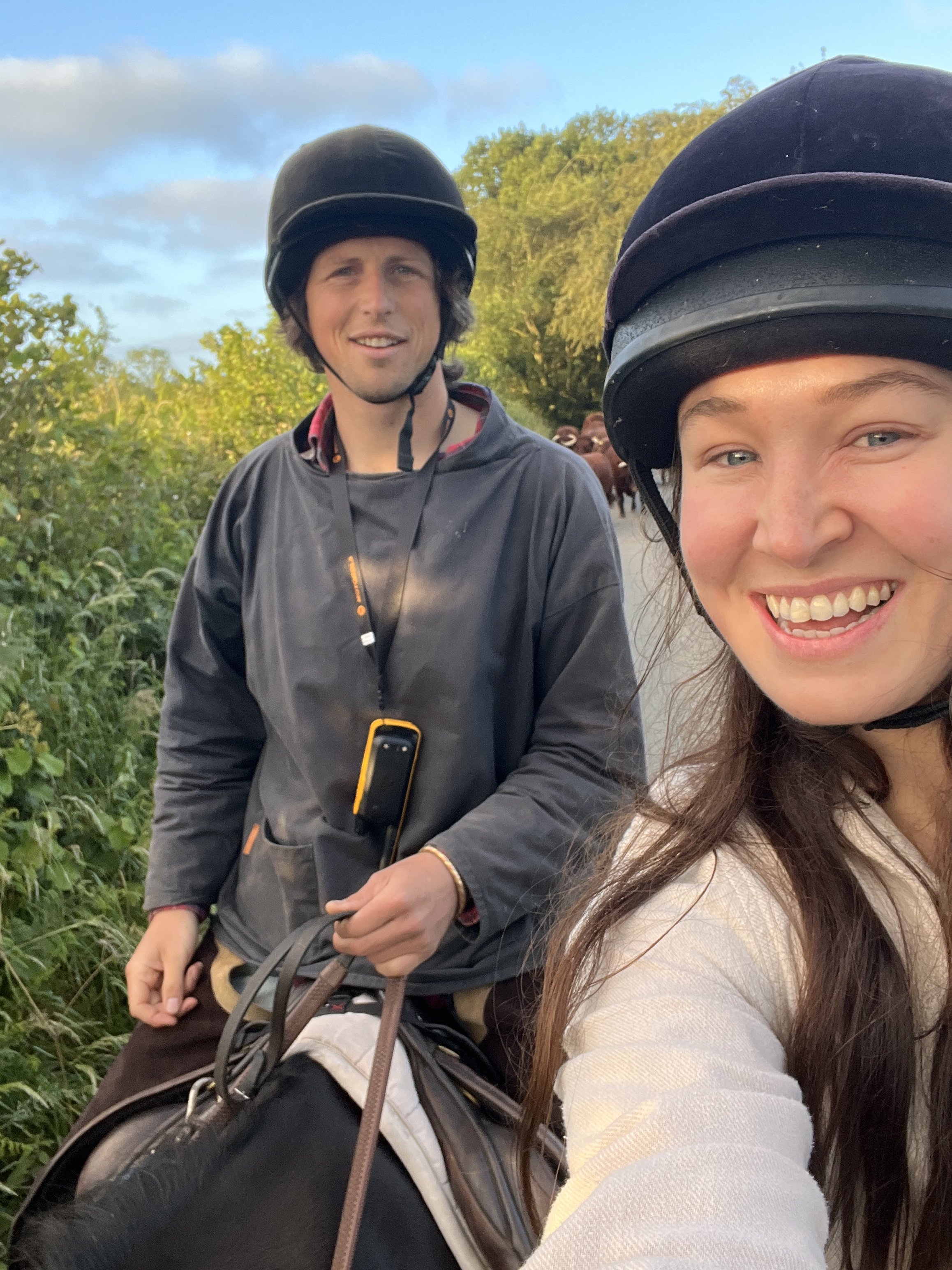
Several of us made the journey on horseback, riding alongside the cattle as generations before us would have done. With horses and small ponies quietly moving alongside the herd, Tui weaving effortlessly behind the cattle, and the first rays of sunlight spilling across the moor, the scene was set.
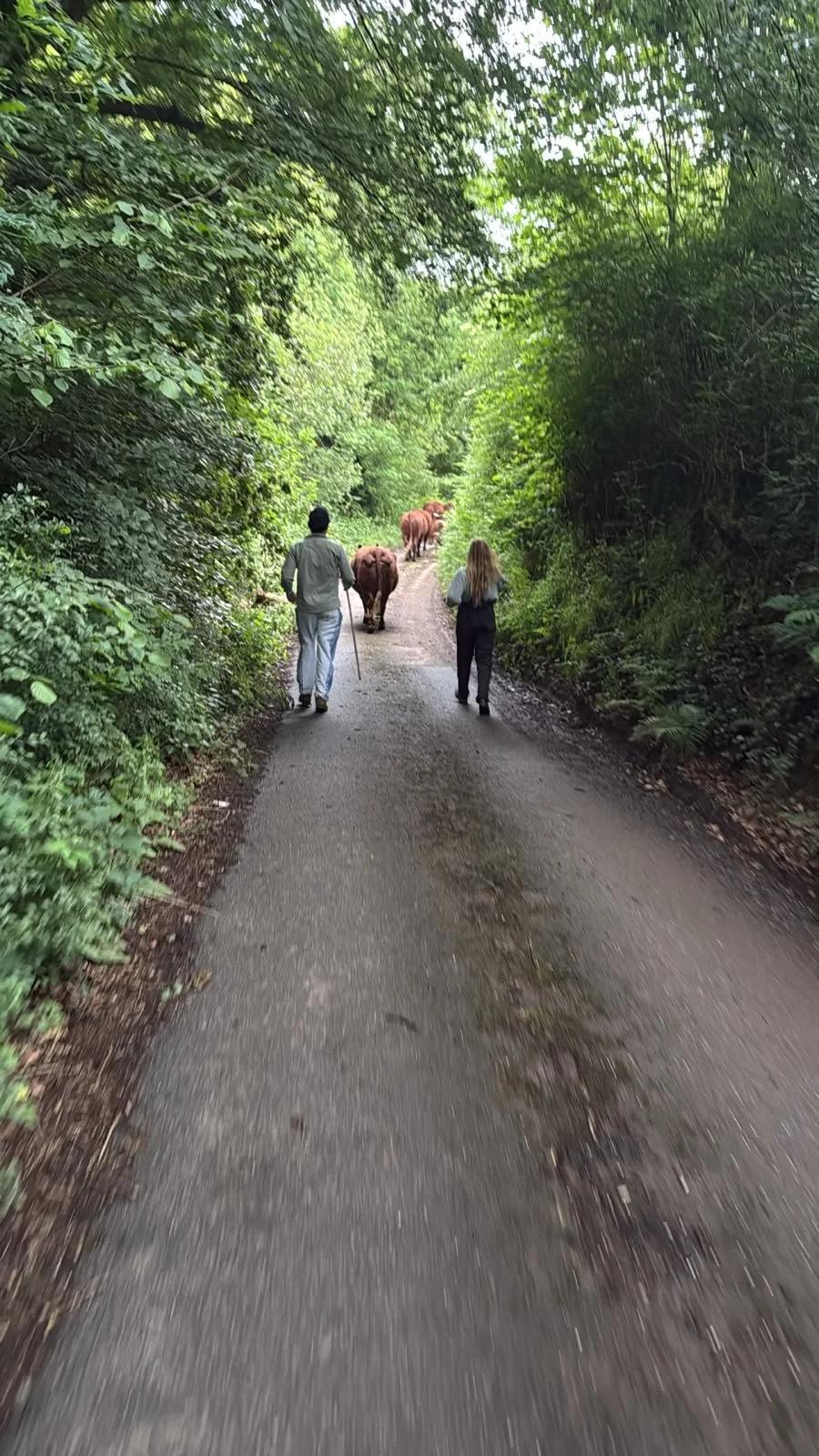
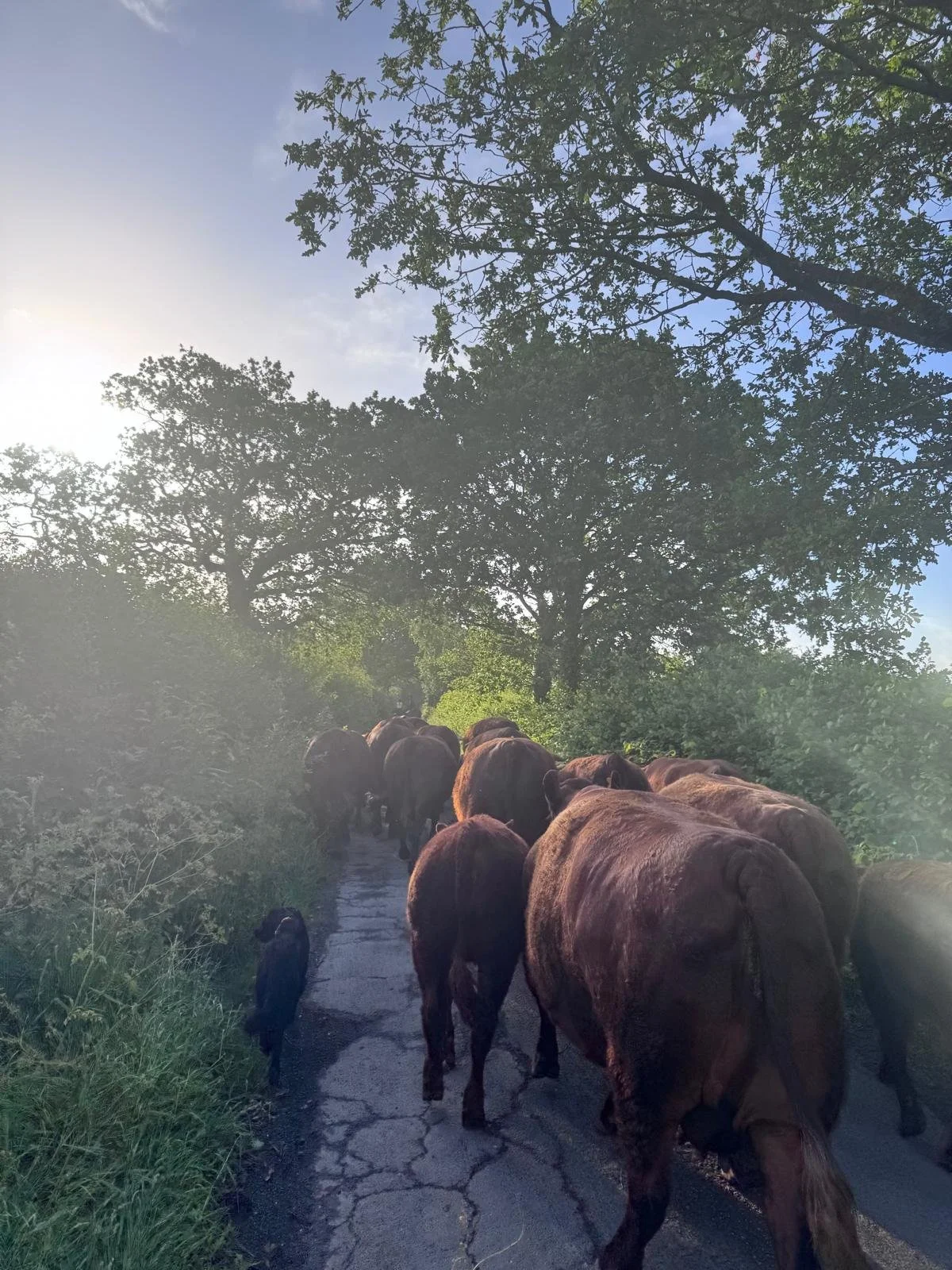
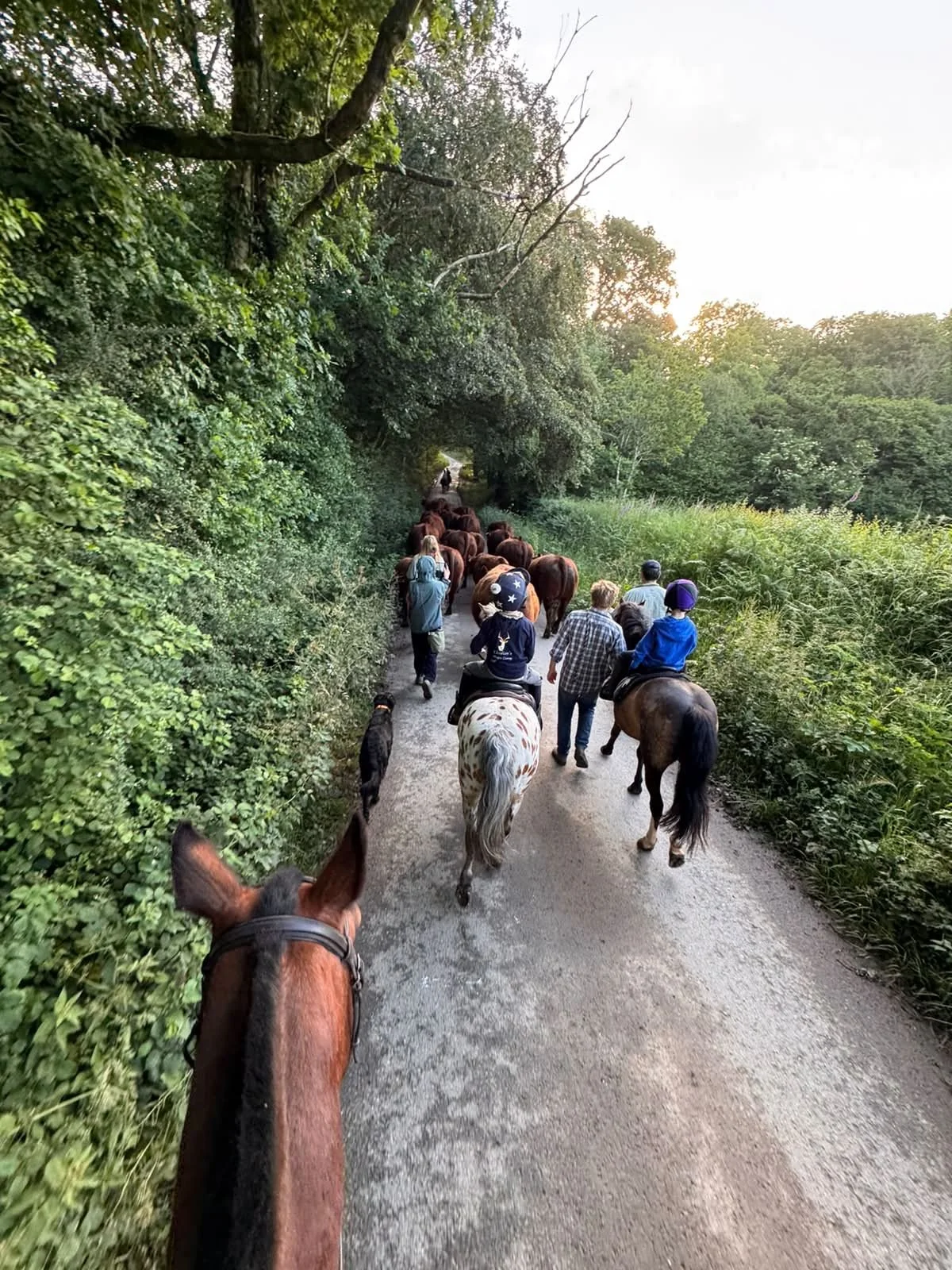
The cattle spend the summer grazing on the moor because these landscapes depend upon them. Carefully managed grazing creates a mosaic of habitats, preventing coarse grasses from dominating and giving wildflowers, insects and ground-nesting birds the space they need to thrive. Their hooves gently disturb the soil, creating tiny pockets where seeds can germinate, while their dung returns valuable nutrients and feeds an astonishing diversity of fungi, beetles and microorganisms. Beneath our feet, an entire unseen microbiome flourishes because of their presence.
The benefits ripple far beyond the grass itself. Healthier soils store more carbon, absorb more rainfall and support stronger plant communities. Grazing helps maintain open landscapes alongside scrub and woodland, creating habitats where countless species can coexist. Even the trees benefit, as nutrient cycling and healthy soil biology improve the resilience of the wider ecosystem.
The cows helping to shape the moor once again hoof by hoof.
When people think about conservation, they often picture landscapes left untouched. Yet many of Britain's most treasured habitats have been created through centuries of careful grazing and traditional farming.
We'd taken part in something much bigger than ourselves - a tradition carried forward by neighbours, families, dogs, horses and cattle, all working together beneath the first light of day.
Before dawn next year, we'll do it all again. Until then, drove on.
Into the embrace of the moor once again.